Showing posts with label Atom. Show all posts

Wednesday, June 1, 2016

The Rebirth Universe... Sounds like a good idea

Well... I don't see the recently restored Elongated Man in there, but I still have to tip my hat to Dan DiDio, Geoff Johns and the rest of the DC guys for this brilliant decision.

The next incarnation of the DC Multiverse seems to be a mix of the New 52 (or the "DCnU") with the pre-Flashpoint multiverse but with some improvements:

  • Legacy characters like Ryan Choi or Jaime Reyes work with their predecessors instead of replacing them out of the blue.
  • The original Teen Titans generation of sidekicks is restored, with a place for Wally and Donna.
  • The golden age superheroes are back and World War II is part of their history again.
  • Romance is back. Aquaman and Mera, and Lois and Clark are couples again.
  • Love, hope and optimism is allowed again. 

Personally, I think it's an excellent change.

The time might seem odd, but if the grimdarkness of the New 52 was damaging the properties, it was smart to cut it before it does worse.

Some people believe DC to distinguish itself from Marvel, by being "the dark one", but it has only been that way in recent years. Traditionally, DC covers all sorts of genres an tones: comedy, romance, western, war, dark, etc. It became darker as it started imitating the tone of stories like Watchmen or Batman: The Dark Knight Returns, rarely with the same level of success outside its Vertigo imprint.

DC's superheroes were more optimistic than Marvel's during the silver and golden age. Usually more assertive and civic minded. Romance and couplehood isn't new to them either. Hawkman and Hawkgirl marry very soon in every incarnation, the Elongated Man was married by his third appearance, Aquaman married in 1964, followed by the Flash and the Atom.

The Rebirth Universe sounds great. So, let's see where it goes.

Saturday, May 28, 2016

DC Universe: Rebirth #1 —Una carta de amor de Johns a la esperanza, el optimismo y el legado

Ya se publicó el primer número del DC Universe: Rebirth, y todo el mundo parece estar enamorado de él.

Rebirth es otra revisión a la continuidad del Universo DC. Es impulsada por la nostalgia, y amenaza con cometerle sacrilegio a la obra maestra y sacrosanta de Alan Moore... Pero con suficiente razón, fue bien recibido.
Rebirth en resumen.
El primer número, escrito por Geoff Johns, abre mostrando el mecanismo de un reloj que le pertenece al narrador. Es perfecto salvo por un solo engrane malo, que evita que el resto funcione. Al final,

—spoiler menor— 

se compone el engranaje. Esta metáfora es obvia: el Universo DC tiene un error (perdición, pecimismo y corte con el pasado), este primer capítulo promete arreglarlo, y empieza satisfaciendo una demanda de muchos fans. Esto es un posible presagio del final de Rebirth y de la forma en la que este cambiará el Universo DC.
Muérete de envidia, Miguel Ángel.
La continuidad que Rebirth critica se conoce como "Las Nuevas 52" o "el nuevo Universo DC" (DCnU, por sus siglas en inglés), fue creada en el 2011 tras la mini-serie Flashpoint. Como todas las continuidades anteriores, no se inició con los nuevos orígenes para cada personaje —estos vinieron después—, sino con nuevas historias que no dependen de un bagaje de años de continuidad. Resultó una eficiente introducción para muchos nuevos lectores, pero también un sacrificio de millones de páginas de la historia de DC.

Conforme fue revelado el pasado de "Las Nuevas 52" (o informalmente, el DCnU), lectores veteranos se enteraron de que muchos de sus personajes e historias favoritas nunca existieron. En las Nuevas 52 personajes como Wally West y Donna Troy no existen, las nuevas versiones de los personajes de la era dorada, como Jay Garrick o Alan Scott son demasiado diferentes y viven en una tierra paralela, el Martina Manhunter, el Hombre Elástico, y Zatanna nunca pertenecen a la Liga de la Justicia, Tim Drake apenas conoce a Batman, y así hay muchas situaciones. Además, todos los títulos perdieron la numeración que llevaban, algunos desde los años 30s. Para muchos lectores, el Nuevo 52 parecía ser negacionismo.
Una de las imágenes inaugurales de Las Nuevas 52.
Muchos fans también percibieron un exceso de violencia y pesimismo. Después de Flashpoint (2011, también por Geoff Johns), el primer número de Detective Comics muestra la cara del Joker arrancada, la primera Red Hood and the Outlaws muestra una Starfire sin recuerdos o amor por sus viejos amigos, el primer Batman muestra un psicópata versión de James Gordon Jr., y el primeros de Catwoman muestra una relación de Gatúblela con Batman meramente sexual sin emoción. Además, muchos matrimonios y relaciones de pareja (Luisa y Clark, Arthur y Mera, Ollie y Dinah, Dick y Kory) dejaron de existir.
Lo que está en juego en Rebirth.
Wally West narra la historia (esto no es spoiler, es claro desde las primeras páginas) y habla de toda la esperanza y el optimismo que se había perdido después de Flashpoint. No es que las cosas eran exactamente felices después de Crisis de Identidad (2004), pero la historia de DC todavía contaba. En Rebirth, la causa es recuperar el legado de DC.


Geoff Johns también hizo Crisis Infinita en 2005, que también se trata de la percepción de que el Universo DC es lugar oscuro y pesimista, solo que en esa historia el que quería devolver la esperanza y el optimismo, Superboy Prime, era el villano y una parodia de fanboys nostálgicos. En Flashpoint la nostalgia y el legado que se perciben y celebran como algo bueno, algo que los héroes quieren.

Claro, la identidad del villano de Rebirth es un meta-comentario sobre Watchmen (Alan Moore, 1986) y su influencia en los cómics de súperheroes. Esto deja interrogantes: ¿En verdad le echan la culpa del pesimismo y la violencia a Watchmen?¿mantendrán el punto de Watchmen intacto? ("entérese for el mismo baticanal, a la misma batihora"). Es demasiado pronto para pensar lo peor. Tratar con una franquicia tan respetada y sus personajes es una tarea compleja, veremos si Johns es capaz de manejarla.

Como un primer acto de la serie, ofrence adelantos de Ted Kord y Ray Palmer teniendo a Jaime Reyes y Ryan Choi como sus protegidos en lugar de sus remplazos, así como la promesa de regresar a los héroes de la era dorada y las relaciones amorosas. Eso es lo que está en juego en esta serie.

Como una historia Rebirth está bien. Como sucede usualmente en las historias de Johns hay mucho énfasis en los asuntos de padre e hijo, en lo que el narrador recuerda o completamente feliz o completamente trágico, o de como los chicos con el corazón en el lugar correcto superan a bullies estereotipados (en EEUU les llaman bullies de los "after school specials" de la TV).

DC Universe: Rebirth #1 no es una obra maestra Mooreana, sino un hit eficiente con muchas probadas y in esperado mensaje editorial de optimismo y esperanza. Finciona bien como una historia, pero excelente como una declaración de misión.
Esperanza, optimismo y legado.

DC Universe: Rebirth #1 —Johns's love letter to hope, optimism, and legacy

The first issue of DC Universe: Rebirth is out, and everybody seems to be in love with it. It is yet another revision to the DC Universe continuity, it is driven by nostalgia, and it threatens to commit sacrilege to the most sacrosanct masterpiece of Alan Moore... But with good reason, it was well received.
Rebirth in a nutshell.
The issue, written by Geoff Johns, opens by showing a perfectly good watch clockwork with one bad gear preventing it from working. By the end,

—minor spoiler— 

the gear is fixed. This metaphor is a no-brainer: the DC Universe is all wrong. This first chapter promises to fix the DC Universe and starts by satisfying a demand of many long time fans; more hope and optimism. The metaphor works as a possible presage to the way this series will change the DC Universe.
The Renaissance of the DC Universe.
The narrator of Rebirth criticizes the continuity created in 2011, officially called the New 52 and created after the Flashpoint mini-series. Like all previous continuities, it didn't start with the new origins of each character —those came later—, but with new stories that didn't rely on a baggage of previous stories. It was an efficient introduction for many new readers, but a sacrifice of millions of pages of DC history.

As the past of this new "the New 52" continuity was revealed, long time readers learned that many of their favorite characters and storylines never happened. In the New 52 multiverse sidekicks like Wally West and Donna Troy don't exist, the new versions of the golden age characters like Jay Garrick or Alan Scott are way too different, the Martina Manhunter, the Elongated Man, and Zatanna never belong to the Justice League, Tim Drake barely knows Batman, and so on. Furthermore, all titles lost their numbering, even those that started it in the 1930s. For many readers, the New 52 seemed to be denialism.
One of the inaugural images of the New 52.
Another perceived problem was the excess of violence and pessimism. After Flashpoint (2011, also by Geoff Johns), the first issue of Detective Comics shows the face of the Joker peeled off, the first Red Hood and the Outlaws shows a Starfire with no memoríes or emotional attachment, the first Batman shows a psychopath version of James Gordon Jr. And along with that, many marriages and love relationships (Arthur and Mera, Lois and Clark, Ollie and Dinah) ceased to exist.
This is what is at stake in Rebirth.
Wally West narrates the story (no spoiler there) and he talks about all the hope and optimism that was lost after Flashpoint. Not that things were exactly happy after Identity Crisis (2004), but all the previous DC history was still there. In Rebirth, the cause is recovering DC's legacy.

Geoff Johns also did Infinite Crisis in 2005, which is also about the perception of the DC Universe as a pessimistic dark place, only that time the guy who wanted to restore hope and optimism, Superboy Prime, was the villain and a parody of nostalgic fanboys. In Flashpoint nostalgia and legacy is perceived and celebrated as a good thing, something that the heroes want.

The identity of the antagonist of the story, of course, is a meta-commentary on Watchmen (Alan Moore, 1986) and it's influence on comics. This raises many questions. Is the story actually blaming the pessimism on it? Will Rebirth keep the point of Watchmen? This seems like a cliffhanger of the 1966 Batman show ("Tune in tomorrow. Same Bat-time, same Bat-channel, same Bat-peril") with Watchmen in Geoff's trap, but it's too soon to think negatively. Dealing with that franchise and its characters is a complex task, we will see if Johns is able to pull it in the upcoming issues.

 As a first act, it offers previews of Ted Kord and Ray Palmer having Jaime Reyes and Ryan Choi as their protegees instead of their replacements, as well as a promise to bring back the golden-agers, and love relationships. This is what is at stake for the rest of the series.

As a story it is fine. As it usually happens in Johns's stories there is a lot of emphasis on father-and-son issues, on the stuff that heroes remember as absolutely great or terribly tragic, and on how they have their hearts in the right place and they overcome after school special bullies.

DC Universe: Rebirth #1 isn't a Moorean masterpiece, but an effective hit with lots of teasing and a long expected editorial message of optimism and hope. It works fine as a story but excellent as a mission statement.
Hope, optimism and legacy.


Sunday, November 20, 2011

Art for Absolute Identity Crisis: BOO-YAH!!

Front center, a great place for the World-famous Elongated Man.
This page was created for the cover art of Absolute Identity Crisis released October 12th, 2011. This has to be the greated thing DC has done for the Elongated Man this year.
Artists often forget how tall is Ralph supposed to be, but that's clearly not the case here.

Tuesday, September 13, 2011

The End of the DC Universe!

The other day, I saw a thread in the DC message boards that got me thinking about the kind of endings that I'd like for the characters of the current DCU. Here's what I came up with:

Green Lantern
Sinestro finally gets Oa destroyed, but he loses his own life in the process. Kyle, John, Kilowog, Soranik, Salaak, Arisia, Ch'p, Katma, Tomar Re, and Sodam become the new Guardians of the earth battery, which only survived because Hal merged with the light.

The Flash
Barry Allen returns after surviving the Crisis on Infinite Earths. Realizing that Central City has long moved on after he disappeared and that Earth is safer than ever, he moves to the future with Iris [so that his climax is CoIE but he still gets his happy "silver age" ending]. The Rogues retire and Wally remains the guardian of the city.

The Atom
Ryan and Ray find a way to cure Jean from her Jimbaran relapses. Ray decided to retire as the Atom to focus on his marriage.

Justice League International
Booster Gold makes the ultimate sacrifice, which only a resurrected Ted will ever acknowledge. Ted becomes the new "Maxwell" of the last JLI [it's a switcheroo deal topped with a "Greatest story never told" situation], which also has Fire as its field leader. Ice retires to have a family with Guy... What none of them ever find out is that Maxwell's actual brain remains in his old cyborg body; he retired long ago and has lived with L-Ron and Wanda managing a Manga Khan space resort ever since.

Wonder Woman
Wonder Woman saves USA from the wrath of the Gods, her body becomes a statue at Washington and Zeus gives her soul, along with Steve's a place in Mount Olympus [CoIE + Greek tragedy].

Batman
The Joker and a small gang of old time criminals push Damian betray his father and Terry. Damian sacrifices taking the Joker with him. Eventually, Bruce dies by Selina's side surrounded by Terry, Barbara, Dick and Tim [It's a legacy thing, he made a difference]. He's buried by them, along with the remaining leaguers and the Batman Inc. Corps.

The Elongated Man
Ralph and Sue keep solving DC mysteries forever [Quantum Leap, anyone?]. Billy Warner becomes the best detective of his generation, the Detective Chimp invites him to join the Croatoan Society.

The Martian Manhunter
The Martian Manhunter retires to live with a single mother and her daughter [is, he embraces humanity]. They die at the same time from natural causes.

Green Arrow
Dinah and Ollie remarry, only to get divorce the next year after that. They remain a couple. They have a daughter; she becames a registered Republican and wants nothing to do with superheroes.

Hawkman
It took a thousand reincarnations, but Hawkman and Hawkgirl finally complete their lives without early tragedies.

Zatanna
Zee finally starts a drama-free relationship with a normal guy and retires [she got over her daddy issues]. She becomes a hot soccer mom. Her kid is teased because there are a lot of "glamour" pics of her mom all over the Internet.

Starman
Not an important character, but Starman sacrificed himself to save Earth from his own race [Ziggy style], which were actually mutants created by the Spiders from Vega.

Aquaman
After Aquaman achieves great peace between Atlantis and the rest of the World, and a lot of prosperity emanates from his county, he dies in a fight against One's son, who was then killed by Garth, who was, at the time, considered a traitor to the kingdom. This way, Garth gets this way his redemption, as well as the forgiveness of Meera and Atlantis. He is finally allowed to reunite with his Atlantean wife: Arthur's daughter.[something Arthurian without making Mera a **** or dragging swords and lakes into it].

Black Lightning
Black Lightning reveals his identity and becames Mayor of Metropolis [he finally made the difference. Would President be too much?]. The Suicide Slum becomes the Suicide District, the cultural center of the city (real state agents keep trying to push for "Simon Heights", but nothing). He puts on his wig for one more fight along the League after that.

Metamorpho
Java takes one of Simon's plan to the extreme, and kills Sapphire; Simon kills Java trying to save her. Although old habits die hard, Simon rejects his own selfishness for her and his grandson; Metamorpho accepts himself in order to provide a role model for his son, he gets Simon's frequent cooperation as a grandfather.

Justice League Unlimited
The Justice League is carried on by Terry.

Superman
Mr. Mxyzptlk puts Superman him through some ultimate test of morals and courage. He passes and the imp alters reality so that his enemies fade away. However, many years later, Luthor returns and things too far in order to destroy him (probably something involving the Anti-Monitor technology from Crisis on Infinite Earths). He is a shell of a man, merged with Brainiac, Amazon and Metallo technologies, and he makes Superman chose between sacrifice or the destruction of all reality. Superman chooses the former and dies. Right then, after realizing that he has lost his humanity and has almost destroyed everything he ever cared about in the process of eliminating him, Luthor commits suicide. It turns out this was Mxyzptlk's real test. He pops up again to restore everything, only this time he leaves Clark without his powers, thus lifting the overwhelming responsibility from his shoulders, so that he finally has no other choice than to spend the rest of his days living a normal life with Lois and their half Kryptonian son. Karen retires to lead her own life with her family. Kara married Jimmy and along with Krypto, she proudly carries Superman's legacy.
The Kents retire to live in the old Smallville farm. Every day Clark looks more like Jonathan. 

Monday, September 12, 2011

Surviviors of the Golden Age!

The Golden Age has little to do with the Elongated Man; however, a little reference could help understand the Silver Age, which is the context of the character. Besides, the Golden Age is the is the historical dawn of the superhero genre. Without Superman and the golden age of superhero comics, there would be no Elongated Man.
After a couple of Jewish kids from Cleveland managed to convince National Allied Publications (DC's name back then) to publish the adventures of their super powered man in blue tights with a red cape and underwear over it, dozens of similarly dressed super heroes popped up in the then-booming American comic book industry. Comics already existed, so did characters like Slam Bradley and Dr. Occult, but Jerry Siegel and Joe Shuster's creation was largely the inspired some of the most notorious DC characters:
  • National ComicsBatman, Green Arrow, Aquaman, Speedy, Robin, Crimson Avenger, Zatara, Sandman, the Spectre, and the Guardian, Hour Man, Robotman, TNT, Dan the Dyna-Myte, etc.
  • All-American Publications: Wonder Woman, Flash, Green Lantern, Atom, Hawkman, Hawkgirl, Dr. Mid-Nite, Sargon, Johnny Thunder, Black Canary, Wildcat and the humorous Red Tornado.
All-American added a lot of properties to the market, but was absorbed by National Comics in 1944. One way or another, the most notorious properties of both teamed-up as the Justice Society of America.

Likewise, a lot of companies were doing the same. Some were bought by National Comics at different during the silver age (I mean, before 1985):
  • Fawcett Comics: Captan Marvel and the Marvel Family, Spy Smasher, Bulletman and Bulletgirl.
  • Fox Comics: Blue Beetle.
  • Quality Comics: Plastic Man, Uncle Sam, Phantom Lady, Manhunter, Doll Man, Doll Girl, Human Bomb, the Blackhawks.  
Additionally, there were the characters of Timely Comics (eventually Marvel), Nedor Comics, Centaur Comics and Archie Comics.

By the late 40s the industry started shrinking, a lot of characters and titles were cancelled, including a lot of National Comics' and  almost all of All-American's, with Wonder Woman as its big exception. The most notorious survivors of the Golden Age of DC Comics were:  
  • Robin Hood and the Sherwood characters (New Adventure Comics #23, January 1938).
  • Superman (Action Comics #1, June 1938), along with him Lois Lane, Jimmy Olsen, Perry White, Lex Luthor, the Prankster, Mr. Mxyzptlk, Toy-man, the Puzzler.
  • Batman (Detective Comics #27, May 1939), aong with him Comissioner Gordon, Hugo Strange, Robin, the Joker, Catwoman, the Scarecrow, the Penguin, Two-Face, the Cavalier, Tweedle Dee and Tweedle Dum, the Mad Hatter, the Riddler. Alfred was switched from Beagle to Pennyworth at some point. 
  • Wonder Woman (All-Star Comics #8, Dec. 1941), along with Steve Trevor, Etta Candy, Ares (often "Mars"), Cheetah, Dr. Psycho, Giganta and Angle Man.
  • Aquaman (More Fun Comics #73, Nov. 1941). 
  • Green Arrow and Speedy (More Fun Comics #73, Nov. 1941). 
  • Congo Bill (More Fun Comics #56, Jun. 1940).
The titles or features of those characters survived through out the 50s, in which the industry was damaged even more by McCarthism, the efforts of Dr. Fredric Wertham and the Comics Code Authority, all of which caused the comics to be heavily censored. Plots became childish and often ludicrous. Additionally, by the mid 50s the focus concentrated on space and sci-fi, do even Batman started to fight alien invaders. This is the early Silver Age period, and it's around this point, 1956, that National Comics (known as "Superman - DC") decided to reintroduce the Flash. Only this time they decided to change his identity. The original Flash was last published in 1949, so the man responsible for this, editor Julius Schwartz felt that it was necessary to reintroduce the character to the new readers of the time. He also felt the need to update him for the 50s. Consequently, the new Flash kept his powers, name and even started his adventures with one of his main villains (the Turtle became Turtle Man); however, his secret identity wasn't Jay Garrick, the college student from Keystone City, but Barry Allen, the police scientist from Central City.

After the success of Flash, National revived old properties in the same fashion with different identities: Green Lantern (1959), Hawkman, Hawkgirl and the Atom (1961); all of them were All-American characters and the the sources of their super powers relied more heavily on sci-fi elements. 
Hawkman and Hawkgirl (Flash Comics #1, Jan. 1940) got almost identical Earth-One counterparts for the Silver Age in 1961, including very similar uniforms and the same civilian names, only their back-story was completely changed. In the Golden Age, they are reincarnated royalty of ancient Egypt; in the Silver Age, they were aliens. One of their enemies, James Craddock a.k.a. the Ghost, also got an almost identical counterpart, this time called the Gentleman Ghost.


New characters created around this era include the Martian Manhunter (1955), the Challengers of the Unknown (1957), Adam Strange (1958), Speedy, Aqualad, the Elongated Man (1960), the Metal Men (1962), the Doom Patrol, Mera (1963), Zatanna, Teen Titans and Wondergirl (1964) and Metamorpho (1965). Zatanna is a very curious case, since she was daughter of Zatara, a Golden Age character.

Another important revamp of this era is the Justice League of America, which took the premise of the Justice Society to a grander scale, starting its roster with the most popular superheroes of DC at the time (Superman, Batman, Wonder Woman, the Flash, Aquaman, the Martian Manhunter and Green Lantern) and then increasing it with the best next characters (Green Arrow, the Atom, Hawkman and eventually Black Canary, Elongated Man, Red Tornado, Hawkgirl, Zatanna and Firestorm).


The practice of creating new versions of the Golden Age heroes slowed down after the creation of the new Atom. The probably because, exactly the same month, August 1961, Jay Garrick was reintroduced in the pages of Flash. It was then explained that the adventures of the contemporary superheroes took place on a reality "Earth-One" and that the old Golden Age ones were alive on "Earth-Two". The characters from Earth-Two started their superheroic careers between 1938 and 1943 and the ones from Earth-One around 1954.

The creation of this alternative realities allowed DC to keep using its old properties without the need for much introduction. Black Canary, for instance, became a member of the JLA simply by moving permanently from Earth-Two to Earth-One. However, as we have seen, the occasional revamp was still done after this point:
  • Robotman (1963)
  • Red Tornado (1968)
  • Manhunter (1973), and 
  • Sandman (1974). 
DC also did the opposite with Power Girl. After the concept of Earth-One and Earth-Two was introduced (along with many more Earths that conformed the 'Multiverse'), they eventually started doing stories completely set on Earth-Two, so they decided to create Power Girl, counterpart of Supergirl, a widely popular character, originally created as supporting cast of Superman during the Silver Age. They are both the cousin of the Superman of their respective Earths, only PG is older and has a bigger and more voluptuous body. Huntress is perhaps the analogue of Batgirl, only with a completely different background as the daughter of Bruce Wayne and Selina Kyle.

It's important to consider that a number of characters debuted in the late 40s and the 50s and kept appearing at least during the early silver age. The transition was gradual:
  • Tommy Tomorrow (Rea Fact Comics #6, Jan. 1947). 
  • Pow Wow Smith (Detective Comics #151, Sept. 1949).
  • Deadshot (Batman #50, Jun 1950).
  • King Faraday (Danger Trail #1, Jul 1950).
  • Darwin Jones, Chris KL-99 (Strange Adventures #9, Aug. 1950).
  • Killer Moth (Batman #63, Feb 1951).
  • Captain Comet (Strange Adventures #9, Jun. 1951).
  • Phantom Stranger (Phantom Stranger #1, Aug. 1952).
    Rex, the Wonder Dog (Rex the Wonder Dog #1, Jan. 1953).
  • Detective Chimp (Adventures of Rex the Wonder Dog #4, Jan 1953).
  • Space Cabbie (Mystery in Space #21, Aug. 1954).


Additionally, some Golden Age characters disappeared during the early Silver Age, but returned before it ended (c. 1986):
  • Vigilante (1970, created in Action Comics #42, Nov. 41), along with the Dummy.
  • Wildcat (1970, created in Sensation comics #1, Jan. 1942).
  • TNT and Dan the Dyna-mite (1978, Star Spangled Comics #7, Apr. 1942).
So, there, that's the context in which the Elongated Man and his wife were originally created. He was the partner and best friend of the 50s version of a character from the 40s. Some people believe he was meant to be the silver age version of Plastic Man, a Golden Age character that as already property of DC by the time Ralph Dibny was created; however, Julius Schwartz always denied so.


Related articles:

Friday, September 9, 2011

The Elongated Man and the Silver Age Timeline!, pt. II: Classic

After a drastic change in censorship (courtesy of McCthyism and, specifically, one Fredric Wertham, of Seduction of the Innocent fame), the target audience became younger kids and what they were allowed to see; consequently stories were simpler and threats more unrealistic. 

During the most classic years of the Silver Age, DC merged the concept of urban superheroes with double identities that was popular in the Golden Age with sci-fi themes that were common in the 1950s. The Martian Manhunter is the first and most obvious example of this. This time, instead of magic, fire-weapons and gimmicks, the new characters used powers based on "super science".  
Additionally, some of the most notorious characters were new versions of old golden age characters with different identities: the Flash, Green Lantern, The Atom, Hawkman, Clayface, Robotman, the Turtle, Red Tornado and Zatanna (daughter of Zatara). They lived in a different reality form the originals, so, the new Flash is often considered the starting point. However, a number of characters that appeared before Flash were kept as part of that continuity, like Superman, Batman,Wonder Woman and Aquaman, all of whom kept their series after the golden age, or like Phantom Stranger and the Martian Manhunter, who were created few years before the scarlet speedster.Most of the superheroes of these times were basically the same guy: a tall, classically handsome, square-jawed, white, muscular, single, honest, loyal, hard-working, all-American, God-fearing and law-obeying guy fighting crime with science-based super powers under a secret identity (the few superheroines were their relatives). Their main differences were name, powers, costume color and hair color. The Elongated Man comes exactly from this mold.
Despite coming from it, the Elongated Man was the first to break the mold by getting married and giving away his secret identity. The Metal Men, the Doom Patrol, Zatanna, Metamorpho and Deadman were some of the earliest examples of characters created outside the stereotype and the first to follow tendencies established by Marvel Comics: tragedy, diversity, constant conflict, unique personality, etc.
During most of this era, every issue had a self contained, stand-alone story (althought, there were occasional two-parters as well) and the status quo of the characters was kept intact. Towards the end, DC started doing some story arcs (Zatanna's Search, The Outsider) and there were some tragedies (like the deaths of Alfred and the Doom Patrol or the betrayal of Snapper Carr). These were also trends that Marvel Comics started. 


1956
October:
  • The FlashTurtle Man, Iris West (Showcase #4).
November: Lew Moxon, the reasons for the Wayne murder are changed from the Golden Age version, Chill is a hitman instead of a burglar (Detective Comics #235).

1957
February:
  • Challengers of the Unknown (Showcase #6).
June: Captain Cold (Showcase #8).
September: Professor Milo (Detective Comics #247).

1958
February: False-Face (Batman #113).
April:
  • Legion of Super-Heroes (Adventure Comics #247), 
  • Mr. Element (Showcase #13).
July:
  • Brainiac (Action Comics #242),
  • Space Ranger (Showcase #15).
September: Calendar Man (Detective Comics #259).
October: Bizarro (Superboy #8).
December:
  • Adam Strange (Showcase #17).

1959
February: Mr. Freeze (Batman #121), Titano (Superman #127).
March: Mirror Master (Flash #105).
April:
  • Grodd (Flash #106),
  • the Easy Company (Our Army ad War #81).
May: Pat Boone (Superman's Girlfriend Lois Lane 9).
May:
  • Supergirl, Metallo (Action Comics #252),
  • the Pied Piper (Flash #106),
  • Bat-Mite (Detective Comics #267), 
  • Rip Hunter (Showcase #20). 
June: Sgt. Rock (Our Army ad War #83).
August: Suicide Squad, Rick Flag (The Brave and the Bold #25).

October: Green Lantern, Carol Ferris (Showcase #22).

1960 
February:
  • Aqualad (Adventure Comics  #269),
  • Kid Flash, Weather Wizard (Flash #110).


March:
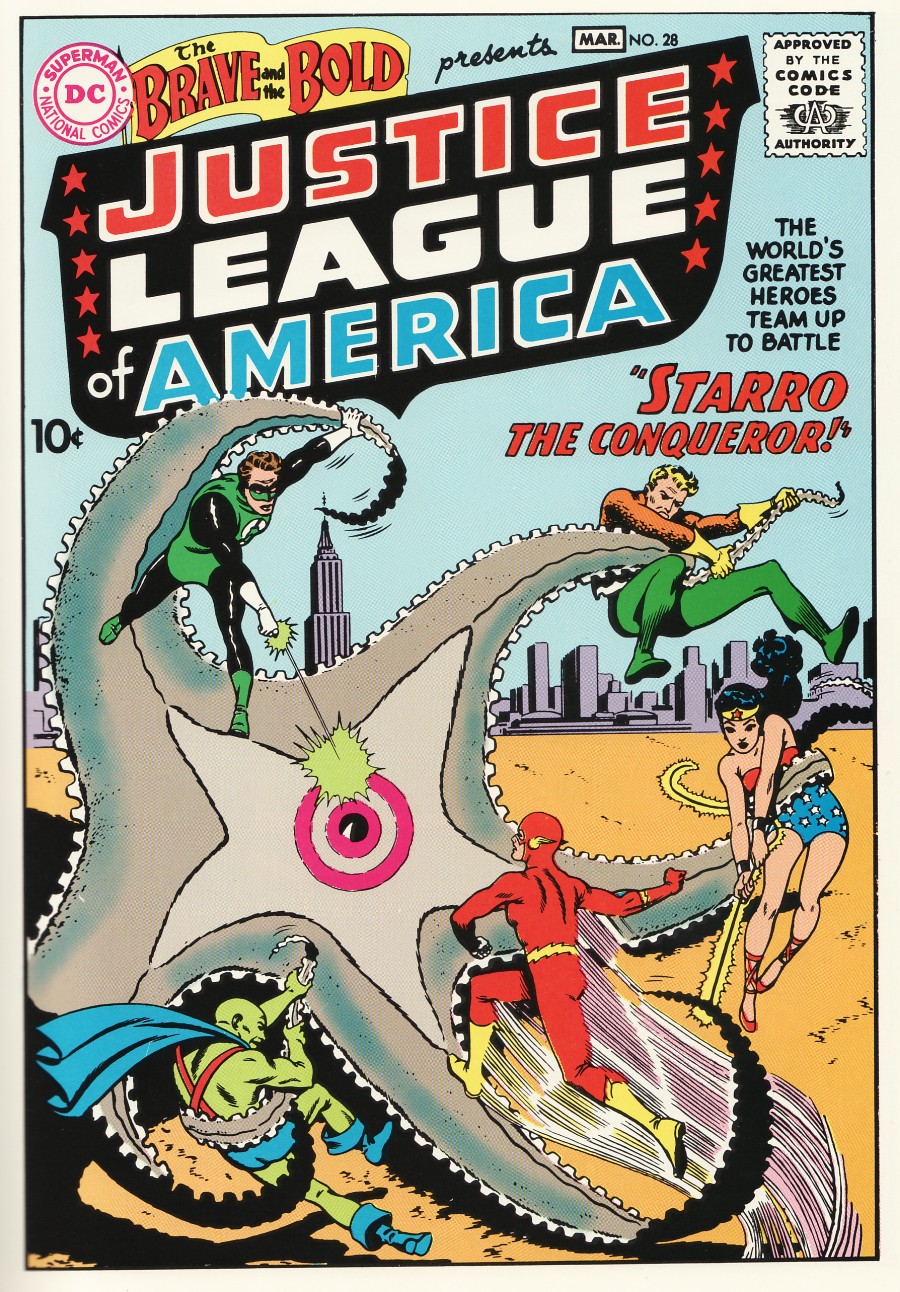
  • JLA, Starro, Snapper Karr (The Brave and the Bold #28),
  • Star Hawkins (Strange Adventures #114),
  • Captain Atom (Space Adventures #33, Charlton Comics).

May: Elongated Man, he becomes the best buddy of Flash (Flash #112).
June:
  • The Trickster (Flash #113),
  • Atomic Knights (Strange Adventures #117), 
  • Professor Ivo, Amazo (The Brave and the Bold #30).
July: The Puppeteer (Green Lantern #1).
August:
  • The Sea Devils (Showcase #27), 
  • The Clock King (World's Finest Comics #111).
September:
  • Kryptonite man (Superboy #83),
  • Cave Carson  (The Brave and the Bold #31).
October:
  • Despero (Justice League of America #1),
  • Thomas Kalmaku, Weaponers of Qward (Green Lantern #2).
November: Arrowette (World's Finest Comics #113).
December: Captain Boomerang (Flash #117).


1961
January: Faceless Hunters (Space Adventures #124).
February:
  • Hawkman & Hawkgirl, Byth (The Brave and the Bold #34),
  • Kanjar Ro (Justice League of America #3).

March: 
  • Sue Dibny, and Ralph marries her off-panel (Flash #119),
  • Hector Hammond (Green Lantern #5),
  • the Star Rovers (Mystery in space #66).
April:
  • Matter Master (The Brave and the Bold #35),
  • Batgirl I (Batman #139).
May:
  • Green Arrow joins the JLA (Justice League of America #4),
  • Tomar-Re (Green Lantern #6), Haunted Tank (G.I. Combat #87).
April: General Zod (Adventure Comics #283).
June:
  • Dr. Destiny (Justice League of America #5), 
  • Shadow Thief (The Brave and the Bold #36).
July: Sinestro (Green Lantern #7).
August: The Top (Flash #122).
September:
  • Atom, Jean Loring (Showcase #34).
  • Flash travels to Earth-2 and meets the Golden Age Flash (Flash #123).
October: Jax-Ur (Adventure Comics #283).
December: Clayface (Detective Comics #298).

1962
January: Qwsp (Aquaman #1).
February:
  • G.I. Robot (Star-Spangled War Stories #101),
  • Mr. Polka-Dot (Detective Comics #300).
March:
  • Metal Men (Showcase #37),
  • Felix Faust, Demons Three (Justice League of America #10).
May: Abra Kadabra (Flash #128).
June:
  • Floronic Man (Atom #1),
  • Dr. Light (Justice League of America #12)..
July:
  • Sonar (Green Lantern #14),
  • Kru-El (Superman's Pal Jimmy Olsen #62).
August:
  • The Elongated Man meets Kid Flash (Flash #130),
  • Antonio Rocca (Superman #155).
September: Atom joins the JLA (Justice League of America #14).
October: Carol becomes Star Sapphire (Green Lantern #16).
November: Chronos (Atom #3).

1963
January: Catman (Detective Comics #311).
March: James Bond, Dr. No, Honey Rider, Three Blind Mice (Showcase #43).
June:
  • Doom Patrol: Robotman, Negative Man, Elasti-Girl, Beast Boy and Chief, General Immortus (My Greatest Adventure #80),
  • Simon Hurt (Batman #156),
  • Dr. Polaris (Green Lantern #21).
August:
  • Crisis on Earths-One: The JLA meets the JSA , debut of Black Canary on Earth-1(Justice League of America #21), 
  • Dexter Myles (Flash #138).
September: 
  • Professor Zoom, the Reverse-Flash (Flash #139), 
  • Tattooed Man (Green Lantern #23).
October:
  • Mera (Aquaman #11), 
  • Shark (Green Lantern #24).
November:
  • Heat Wave (Flash #140),
  • I.Q. (Mystery in Space #87).
December: Eivol Ekdal (Detective Comics #346).

1964
January: The Terrible Trio (Detective Comics #323).
March: Professor T.O. Morrow (Flash #143).
May:
  • The Elongated Man gets his feature (Detective Comics #327),
  • Chac (Hawkman #1).
June:
  • Teen Titans, Wonder Girl (The Brave and the Bold #54), Composite Superman (World's Finest Comics #142).
  • Alfred dies, Dick Grayson's aunt Harriet Cooper debuts and replaces him (Detective Comics #328).
July: President John F. Kennedy (Superman  #170).
August: The Crime Syndicate (Justice League of America #29).
September: The Elongated Man meets Batman and Robin (Detective Comics #331).
October:
  • Zatanna (Hawkman #4, Zatanna's Search, pt. 1: "The Girl Who Split in Two"), probably the first crossover.
  • Sue does the first 'birthday mystery' for Ralph (Detective Comics #332).
November:
  • Mento (Doom Patrol #91),
  • Hawkman joins JLA (Justice League of America #31).
December:
  • Aquaman marries Mera (Aquaman #18).
  • The Outsider (Detective Comics #334),
  • Martin Beene (Detective Comics #334).

1965
January:
  • Metamorpho, Simon Stagg, Java, Sapphire Stagg (The Brave and the Bold #57),
  • Billy Warner, Elongated Man's #1 fan (Detective Comics #335).

February:
  • Enemy Ace (Our Army at War # 151),
  • Zatanna meets Batman (Detective Comics #336, Zatanna's Search, pt. 3: "Batman's Bewitched Nightmare").
March: Getaway Genius (Batman #170).
May: The Riddler of Earth-1 (Batman #171).
June:
  • Immortal Man (Strange Adventures #177), 
  • Evil Star of Earth-1 (Green Lantern #37),
  • Amos Hurd, the Millionaire Cowboy, and wife (Detective Comics #340),
  • Zatanna meets the Atom (Atom #19, Zatanna's Search, pt. 2: "World of the Magic Atom").
July: Goldface (Green Lantern #38).
August: Johnny Thunder of Earth-1 (Justice League of America #37).
September:
  • Animal Man (Strange Adventures #180),
  • the Phantom General (Detective Comics #343).
October:
  • Aquababy (Aquaman #23),
  • Krona (Green Lantern #40),
  • Egg Fu (Wonder Woman #157),
  • Johnny Witts (Detective Comics #344).
  • Lana Lang becomes the Insect Queen (Superboy #124).
November:
  • Judomaster (Special War Series #4, Charlton Comics),
  • Blockbuster (Detective Comics #345).
December: The Key of Earth-1 (Justice League of America #41).

1966
January:
  • Major Disaster (Green Lantern #43),
  • Dial H For Hero (House of Mystery #156),
  • Stanley and his Monster (The Fox and the Crow #95),
  • Zatanna meets Green Lantern (Green Lantern #42, Zatanna's Search, pt. 4: "The Other Side of the World").
April:
  • Enchantress (Strange Adventures #187),
  • The Elongated Man meets Green Lantern, the Elongated Man's red uniform, the Monarch of Menace (Detective Comics #350).
May: Cluemaster (Detective Comics #351).
June: Inferior Five (Showcase #62, they reside on Earth-12), Poison Ivy (Batman #181).
July: Dial H calls Plastic Man (House of Mystery #160, first time in a DC publication).
August:
  • Chief Miles O'Hara (of the 60s Batman show fame) is introduced to Earth-1 (World's Finest Comics #159) 
  • Peter Cannon, Thunderbolt (Peter Cannon... Thunderbolt #1, Charlton Comics),
  • Parasite (Action Comics #340),
  • Bug-Eyed Bandit (Atom #26),
  • Dr. Tzin Tzin (Detective Comics #354).
September:
  • Ocean Master (Aquaman #29),
  • Nightshade (Captain Atom #82, Charlton Comics),
  • The Elongated Man meets Zatanna (Detective Comics #355, Zatanna's Search, pt. 5: "The Tantalizing Troubles of the Tripod Thieves"). 
October:
  • It is revealed that Alfred is alive and that he's actually the Outsider, he resumes his dutties as the butler of the Wayne Manor (Detective Comics #356).
  • Amalak (Superman #190).
November:
  • Blue Beetle II (Captain Atom #83, Charlton Comics),
  • Peacemaker (Fightin' 5 #40, Charlton Comics),
  • Ultra, the Multi-Alien (Mystery in Space #103),
  • Barry marries Iris West (Flash #165).
December: Son of the Plastic Man (Plastic Man, vol. 2 #1, the character resides on Earth-12).

1967
January: Batgirl (Detective Comics #359), B'wana Beast (Showcase #66), Allen Funt (Action Comics #345).
February: , Zatanna's Search ends: The Elongated Man teams up with the JLA (Batman, Hawkman, Atom and Green Lantern) to help Zatanna finally find Zatara (Justice League of America #51, "Z - as in Zatanna - and Zero Hour"), Scarecrow of Earth-1 (Batman #189).
May: The Maniaks (they are a rock band like Josie and the Pussycats, Showcase #68).
July: Lion-Mane (Hawkman #20).
August: Enigma of the Elongated Evildoer! (Detective Comics #367).
September: Black Manta (Aquaman #35).
October: Deadman (Strange Adventures #205), The Elongated Man teams up with the Atom (Detective Comics #368).
November: Woody Allen (Showcase #71), the Awesome Threesome (Aquaman #36).

Notes: I used cover dates for this list (wich means you have to substract a couple of months).
Font types are modified according to the character.
  • Important character,
  • Character with an equivalent on Earth-2,
  • Character with an Earth-2 double,
  • Might have Earth-2 double, but their debut date makes it abiguous,
  • Crossed-over descendant of an Earth-2 character,
  • Created in other media first.
  • Not tied to the DCU yet,
  • Related to the Elongated Man.  
Continue to:

Go back to:
Related articles: