Showing posts with label silver age. Show all posts

Monday, May 18, 2015

The Secret of the DC Kaiju: A list of the Giant Monsters of the DCU

Everybody knows Jack Kirby made a big deal of awesome giant monsters for Marvel Comics, but what about DC? It turns out they are not as recurring but the DC Universe features a great number of the type of fictional creatures that Pacific Rim popularized as 'kaiju'. Here are some of the best known:

Mr. Atom


We start with a giant robot built by a mad scientist. A bit silly-looking, but he fits the trope.
First appearance: Captain Marvel Adventures #78 (1947), "Capt. Marvel Meets Mr. Atom". Story by Otto Binder, art by C. C. Beck.

Brimstone

A huge, artificial intelligence with a humanoid body created by Darkseid to conquer Earth or something. He can generate fire and is incredibly strong.
I prefer the DCAU version.


First appearance: Legends #1 (November 1986), "Once Upon a Time...!". Story by John Ostrander and Len Wein, art by John Byrne.

The Centre

It turns out the Centre is Dinosaur Island, has been here longer than us and it wants us out. That's good enough to gather the entire superhero community.

First appearance: DC: The New Frontier #1 (March 2004), "Our Fighting Forces". Story and art by Darwyn Cooke. 

Chemo

Chemo is the most recognizable enemy of the Metal Men. So much that his popularity rivals theirs. He is not a mastermind like Starro, but when it comes to gigantic havoc makers, along Validus, he is go-to kaiju of DC Comics.
First appearance:  Showcase #39 (July - August 1962), "The Deathless Doom!", story by Robert Kanigher, art by Ross Andru and Mike Esposito.

The Construct

Somehow he tends to be overlooked as a generic robotic villain, but the Constrict has both the right visuals (ok, a bit too 70s), and the perfect sci-fi story: "an artificial intelligence created from the electromagnetic spectrum broadcast from Earth, the Construct has an inherent hatred of humanity due to his lack of a physical body".
First appearance: Justice League of America #142 (May 1977), "Return From Forever!". Story by Steve Englehart, art by Dick Dillin.

Faceless Hunters

Can't help but love how the 50s they looked. I'm so glad they became a thing. They come from "Klaramar - a world revolving within an atom on the planet Saturn". How about that? 
First appearance: Strange Adventures #124 (January 1961), "The Face-Hunter From Saturn". Story by Gardner Fox, art by Mike Sekowsky.

Fire Trolls

These are some of the most recurring enemies of Aquaman. I think they qualify both as kaiju and invader races (I'll do a post on that later).
First appearance: Aquaman #1 (February 1962), "The Invasion of the Fire-Trolls". Story by Jack Miller, art by Nick Cardy.

Giant Frogs

It's probably just because of the cover, but these guys get a lot of attention on the web. They never returned, but Jim and Rhonda Trent, the "scientists" from this silver age story, appear in a previous issue.
First appearance: Strange Adventures #130 (July 1961), "War With The Giant Frogs". Story by Jack Miller, art by Nick Cardy.

Giganta


DC's resident 50-foot woman can actually grow bigger than that at will. If that wasn't enough, she used to be a gorilla.
First appearance: Wonder Woman #9 (June 1944), "Evolution Goes Haywire". Story by William Moulton Marston, art by Harry G. Peter.

Ichthultu

I can't believe it's not Cthulhu. No seriously, I think it would have been more awesome. The Ghostbusters did it, anyway.
First appearance: Justice League, season 2, episode 39 (Original Airdate - November 15th, 2003), "The Terror Beyond". Story by Dwayne McDuffie.

Imperium

Bruce Timm loves Lovecraft. Not surprisingly, when the White Martians became weird, awesome gooey things, their leader became a creepy, floating balloon with tentacles.
First appearance: Justice League, season 1, episode 3 (Original Airdate - November 17, 2001), "Secret Origins, Part III". Story by Rich Fogel.

Jimmy Olsen, the Giant Turtle Man

Yep, [among many other things] Jimmy Olsen became a Giant Turtle Man. 
Because silver age. 

And because stealing.
First appearance as Turtle Man: Superman's Pal, Jimmy Olsen #53 (June 1961), "The Giant Turtle Man!". Story by Jerry Siegel, art by Curt Swan.
By the way, as awesome as it would have been, this is not Jimmy (or Gamera), but it the intention doesn't get more explicit than this.
First appearance: Justice League Unlimited, season 2, episode 3 (Original Airdate - September 24th, 2005), "Chaos at the Earth's Core". Story by Matt Wayne.

Mageddon, the Anti-Sun

If you think Kirby was creative, check out this jewel from the mind of Morrison: "Mageddon is an ancient weapon created by a race of now extinct Old Gods. It is a huge (larger than the planet Earth) semi-sentient orb with a squid-like face that incites hatred and violence in life forms as it approaches the heart of a galaxy".
First appearance: JLA #15 (February 1998), "Rock of Ages, Part Six: Stone of Destiny". Story by Grant Morrison, art by Howard Porter.

Millenium Giants

Meh. I really find them boring. If somebody can offer me a shot with all of them, maybe I'll put them.

M'nagalah

A kaiju based on cancer and all life comes from it. That's a happy thought.

Mogo

An entire sentient planet. Good thing he is a good guy. 

The Monster that fished for men 

Only four pages. Being on the cover goes a long way. These creatures were created by Jack Miller and Murphy Anderson. 

Mr. Nebula

This guy is as silly as it gets for the Justice League International. He is just like Galactus, only he wants to redecorate the planet.

Prometheon

As Kirby as it gets. A defense weapon that reacts to energy, created by an alien race that couldn't handle him.

The Rainbow Creature


As ridiculous as this monster looks, he has had a revival thanks to Grant Morrison and even Batman: The Brave and the Bold TV series.

Shaggyman

A creature that doesn't require food or rest and just wants to destroy anything that moves. There goes your average 50s monster film.

Solaris

Moore did a freaking planet, so Morrison had to top it with a sun (even if it is a small one). And since it can't get more epic than fighting the sun itself, Solaris makes a great foe for Superman. 

The Stone Sentinels of Giant Island

One-shot characters that never returned. However, being brainchildren of Jack Kirby and with the story reprinted a couple of times these guys get a great reputation. The concept is pretty good: Mindless guardians left by an alien race to protect the island from the living. I think the island could still return with them.

Starro

Starro is silly and creepy at the same time. He became one of the most recurring enemies of the Justice League and one of the most recognizable giant monsters of the DCU.

Titano

Superman vs. King Kong on an even field. Titano is a landmark of the Superman mythos. They should make a graphic novel about it.  In the 50s, it could have been an interesting movie, now it would be tricky.  

Topo

...I think I prefer the regular size lovable octopus.

Ultra-Humanite (T-Rex)


A mad scientist on the body of a kaiju, two archetypes in one.
I don't think the albino gorilla is big enough to count in this list.

Validus

A human mutated into a giant, super-strong, invulnerable monster who can project "mental lightning". Along with Chemo, Validus is the most recognizable of the giant monsters of DC.

Volcano Man

A giant made out of lava. He is an enemy of the Challengers of the Unknown.

The World Wrecker

A jaeger went out of control, thus becoming a giant monster. With a crowd of 7 controlling the robot from the head, this guy might have been one of the earliest examples of mechas.

Only appearance: Strange Adventures #50, "The World Wrecker", story by Otto Binder, art by Carmine Infantino, cover Murphy Anderson. The story was reprinted in "From Beyond the Unknown" with another Anderson cover.

Sunday, December 1, 2013

Every comic book documentary you must watch


Well, not all of them, but at least I have your attention now.

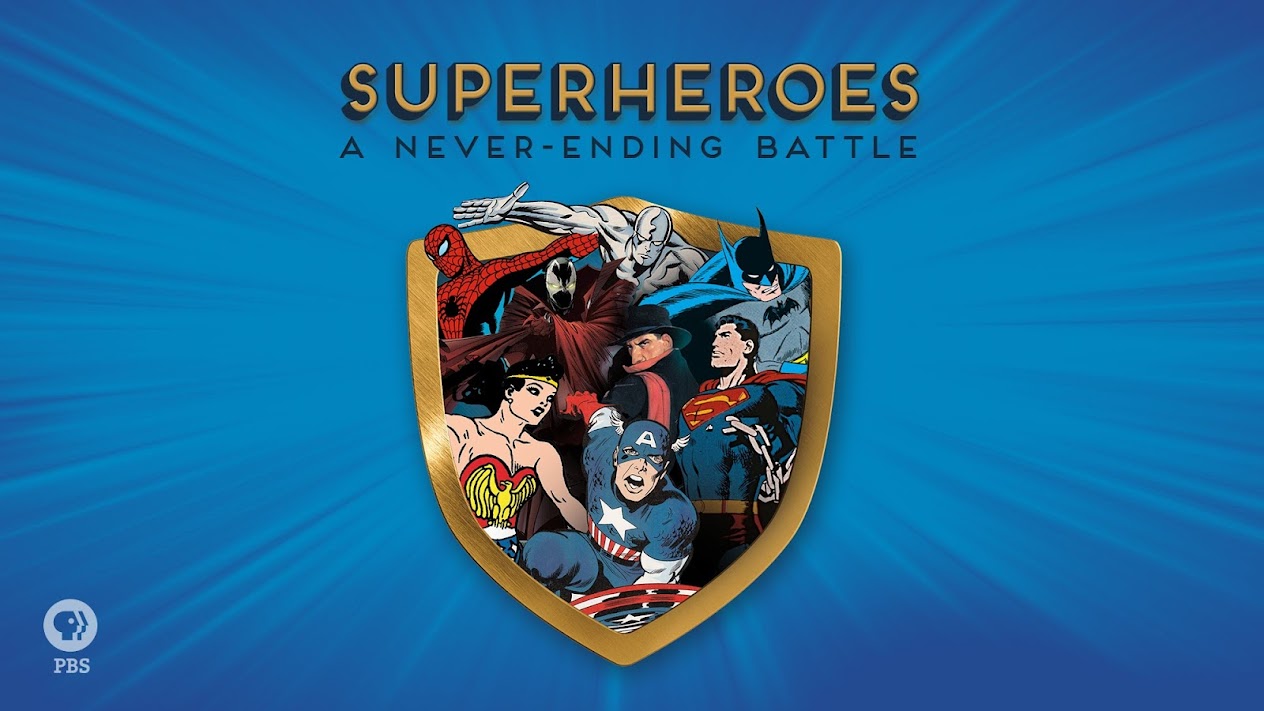
After watching PBS's wonderful "Superheroes: A Never Ending Battle" I was left with an itch for more documentaries like that. However, there were much fewer than I would have imagined. So, here are some of the best.

Comic Book Confidential

This documentary produced by Metro-Goldwyn-Mayer features the whole picture of the comic-book phenomenon in the United States as of 1988. The origins of the medium, the evolution of superheroes and all the other genres as they born in different eras: horror, comedy, underground, etc. All of this clearly contextualized and documented with nice production values and lots of style. I'd say this is one is essential (thanks, Frank!).


I did not want to add the whole movie in this case, but by the time I posted these videos, the full movie was available at youtube. It has Spanish subtitles, though.

Superheroes: A Never Ending Battle   

Produced by PBS, this is basically a three-hours intensive "History of Superheroes 101".  It is split into three episodes.


The first part, "Truth Justice and the American Way", deals with the origins of the superhero genre, how they represent the American dream, and their ties to the World War II era.

"Great Power, Great Responsibility" is about the silver age resurrection of the genre after Frederick Wertham crippled the comic book industry. This part explains the influence of the atomic age and the cold war on superheroes, as well as their new troubled lives and the transition into the bronze age.

Finally, "A Hero Can Be Anyone" covers the modern era, showing their more mature tone and how popular culture has embraced superheroes in recent years.

If you want to see a better description of the special, here are their creators in their Comic-Con 2013 panel:

Comic Book Superheroes Unmasked

This is History Channel's take on the superhero tradition. Everything you need to know in an hour and a half.


Tales from the Crypt - From Comic Books to Television

After watching all those documentaries, we get the big picture of American comic book superheroes, but our understanding of American comics is still quite incomplete. A big missing piece would be the history of EC Comics and how its explicit content lead to the creation of the Comics Code Authority that censored content during the silver age. This 2004, CS Films documentary covers all the basics. 


Overstreet's World of Comic Books

This one is pretty funny. It was done in 1994 and apparently, back in those times the comic book industry was booming like it was during the golden age. I can't help but think about what was about to happen back then.
I think it's worth seeing not only because we get the perspective of a slightly different era, but also because it features a lot of guys we wouldn't be able to see in more recent documentaries.


Wonder Women! The Untold Story of American Superheroines

Here we have some focus on the history of superheroines and their influence on feminist movements. Before watching this I had no idea women actually cared that much about Wonder Woman. Good for them.


Super Heroes United - The Complete History Of The Justice League

Among various extras in the Justice League: The New Frontier (2008) DVD, Super Heroes United presents the history of DC's premier team. As a Justice League documentary it rushes through all the eras, leaving out important stuff, like the roster of the satellite era, for instance. However, it does a good job presenting the DC transition from golden age to silver age, something that was missing in documentaries like Superheroes: A Never Ending Battle.


Comics Britannia

BBC's version of what was going on across the pound. Even though we love to adopt every brilliant idea the British ever have and make it par of our culture, and even though we are well aware that they somehow produce ridiculously talented giants like Alan Moore, Neil Gaiman or Grant Morrison, we still don't really know what is going on there. This series is quite eye opening. We need that kind of comic book culture over here.


In Search of Steve Ditko


Jonathan Ross' attempt to track down Steve Ditko, one of the most influential, enigmatic and idiosyncratic creators in the American comic book industry (Spider-man, Dr. Strange, The Question, Blue Beetle). This documentary was produced for BBC Four.

The rest of the documentary is available on Youtube.

Moebius Redux


In order to fully understand the potential of comic book art, this documentary is a must. The way I see it, Moebius is the Michelangelo of comics, and this BBC Four documentary is a great introduction to his world. 


Jack Kirby, Storyteller


.Jack is the King. Without him, American comics and the entire superhero genre would have a completely different vibe. It has been said that he created half the characters of Marvel and DC. Half. If all you can think when you see his stuff is how chunky it is, you need to watch this video.


NOTES:

  • Please, let me know in the comments section if a link gets broken.
  • I'll continue adding videos to this post as they become available. I might take recommendations from the comments.
  • I don't know much about copyrights, so I'm just going by whatever Youtube allows. In any case, readers can always report them whatever they see here.
  • UPDATE: Following Frank's suggestion I added Comic Books Confidential  

Sunday, October 23, 2011

The Elongated Man and Wife: Embargoed?!

As I mentioned before, the Dibnys had a brief period of hype from 2003 to 2004; however, since 2007 they have been making less and less appearances. I'm talking comics, animation and action figures. For a while, I have been suspecting that the respectable DC powers that be were avoiding him, and now I just learned something that seems to back that. Brian "Pendragon" Isaacs posted this at his blog:
"I got a chance to talk to Scott [Neitlich, AKA Toy Guru, from Mattel] at New York Comic Con about when, we the fans will be seeing Ralph in action figure form. If DC Comics has anything to say about it, it’ll be never.
"For those who don’t know, or can’t tell, Scott himself is a comic fan, and a big fan of the JLA Satellite Era. He went to bat for us collectors and got shot down. Mattel’s hands are tied, as this is a license they have to pay for.
"DC Comic’s reasoning…They don’t feel Ralph is a significant character, not deserving of an action figure, and don’t want to invest any more money into him."
(Read the full article at his blog).

Why indeed. Their importance is being recognized both by Flash and Geoff Johns, but what's the point to this scene? Why leaving the Dibnys out of this scene if there were not going to be part of another story? 
I once managed to get a direct confirmation from Dan DiDio that there are no plans for the Dibnys; however, according to Brian, this has nothing to do with him or Jim Lee, this one comes from upstairs.

Brian's proposal is to have a respectful letter writing campaign, asking to make the Dibnys part of the DCnU and Mattel's DC Universe Classics collection (I'll add DC Universe Online and Young Justice). So please spend $.44 on a stamp and send your letters to:

Diane Nelson
President
DC Comics
1700 Broadway # 7
New York, NY 10019-5905

It's also important to spread the word and figure out other strategies to get Ralph back. Remember that we should avoid pointing fingers; disrespect won't get us anywhere.

Here are some reasons to restore Ralph and Sue:
  • He was a member of the 3 first incarnations of the Justice League and was one of the longest staying member (about 20 years). At one point around the mid 90s, he was the member with the longest mileage. Not even Lois belongs to the JL, Sue became bureau chief (this means control outside the field, like Max).
  • They are a silver age legacy. Their most important stories were handled directly by Julius Schwartz, John Broome, Gardner Fox and Carmine Infantino. Len Wein put Ralph in the League, Keith Giffen in JLI, Mike W. Barr created the modern version and Mark Waid and Grant Morrison gave him his ultimate mystery.  
  • They are both basic to the Flash (Barry) mythos, which is not that rich without the Gallery. During the first decade of Barry, only Iris and Wally were more recurring than Ralph (Mirror Master matched him when he got his 'tec feature). Barry's supporting cast are basically Iris, Wally, the Allens, Dexter Myles, Hal, Fiona and the Dibnys. They were on his last thoughts before he "died" and on his first thoughts after Brightest Day. 
  • The Elongated Man is a Detective Comics classic. He had the most recurring feature after Slam and the Martian Manhunter. 
  • The Dibnys belong to DC's top social circle. They knew the secret identity of anybody who's somebody (Bruce, Clark, Diana) and double dated with the Allens, the Halls, the Palmers, the Stranges, Ollie and Dinah.
  • Ralph offers diversity to the DC pantheon. He's the only hero that truly represents the classic detective genre (which TV still capitalizes in series like House, Monk, the Mentalist, the Murdock Mysteries, etc.). He's one o the few heroes that never lost the lighthearted spirit of the Silver Age. Just read the first 5 issues of his 'tec run, no DC couple has ever been as charming as the Dibnys. They are like Mad About You, The Dick Van Dyke Show and Columbo rolled into one.
  • They are not obscure yet, much less with their notoriety from Identity Crisis, Formerly Known as the Justice League and 52
  •  If Morrison pulled a series lead by Animal Man, a detective superhero modeled after Nick Charles and Sherlock Holmes writes itself. Just get DeMatteis, Barr, Dixon, Giffen, Morrison or Waid on it, I know as a fact that all of them love those characters.
  • If the Japanese managed to make a franchise out of a stretchable pirate who gets his powers from a fruit (Luffy D. Monkey from One Piece), I think a ductile detective superhero set in the DC Universe has great chances.
  • Ralph makes crowd scenes look pretty cool.
And that's right, Timm and McDuffie thought he's awesome enough to go against DC's toughest villain! 

Update - 10 / 24 / 11

Scott Neitlich released the following statement on his Facebook page:
"Okay. 100% not true. I must have made a statement (as has always been the case) reconfirming that, yes, it is still true that DC and Warner Bros has final say on our character selection, but in no way have they ever bared us from doing a character like Elongated Man! "In fact just the opposite; DC and Warner Bros. have been amazing partners, always helping us to push the limit on character selection like Lobo in JLU and Swamp Thing in DCUC!
"Ralph is in no way off limits. In fact we have already done him several times. We even did an Elongated Man figure in JLU in an outfit he didn’t even wear on the show. That is how cool he is. There always seems to be one figure “we haven’t gotten to yet” that fans have thoughts was off limits or wasn’t going to happen. Be it Martian Manhunter, Flash 1 or now Elongated Man. The answer is always; just because your favorite figure is not out yet does not mean he or she won’t be in the line one day, keep your suggestions coming!
If any websites reported a quote from me stating the opposite, I did not give any sit down interviews at NYCC, so this “quote” may have been strung together from different things orally overheard in the booth to different people. No statement of this type was officially announced or provided by Mattel or given to any site as a quote or interview. It sounds like it is a misinterpretation of a few things overheard in passing and then attributed (falsely) to me as a direct quote.
"Hope this clears this one up! Ralph is not banned in the least and we are really excited to get to him one day!"
The whole thing was the top trending topic on Sunday at Bleeding Cool, its own Mark Seifert said:
"The Elongated Man too obscure to have a new action figure? I don’t think so.  First, there’s an excellent case to be made that there are no insignificant characters in post-internet comic book fandom — I mean, Geoff Johns could turn him into one of the stars of the New 52 by ground hog day, if he wanted to.  And second, he’s not an obscure character at all.  A classic of the Silver Age and beyond.

I hope that's true. Ralph and Sue's absence in the DCnU, DC Universe Online, Young Justice's Justice League and even in the DC Universe Classics still makes me glad I wrote that letter and I hope other Elogated Man fans do the same. Ralph is still absent without a reason.

For more information, go read the  "The Mattel - DCUC - Elongated Man quagmire" at Comics-X-aminer, or read the Toy Guru's original facebook note.

Update - 10 / 26 / 11
Friend of this blog, Frank Diabolu, from the Justice League Detroit blog (among other awesome blogs, like The Idol-Head of Diabolu) noticed that the Elongated Man pic from the Bleeding Cool post about the embargo is the same that he modified from a Kevin Nowan image from 52, week 13 for his blog and that I kind of stole for this blog:
Which makes it very possible that Rich Johnston, author of that post, was tipped by this very blog before reading the original and now deleted post from Pendragon. So, if I'm right, Rich, you're welcomed, ha, ha.

Update - 10 / 26 / 11

It turns out that the outcries for Ralph and Sue's return started a bit earlier, and that the clamor is not only for action figures. Roughly at the same time, while Brian "Pendragon" Isaacs was encouraging people to demand the Elongated Man action figure, Robert Eddleman, from Panels on Pages, wrote a column asking DC to use the Reboot possibilities in favor or the Dibnys, restoring them among the living. In his words Retcon This! The Deaths of Ralph & Sue Dibny, a thought that I couldn't support more.  

Update - Nov 21, 2011


According to John Babos, DC Comics Co-Publisher, Dan DiDio conirmed on Facebook that there are no plans for Ralph Dibny, Ted Kord and Garth (Aqualad). 
A while ago I managed to get the same confirmation from him.
This is doesn't mean that they are gone forever, but at leat that, for the time being, DC's Co-Publisher claims (he could be misleading people) that there are no plans for them. He didn't say that they are gone forever.
  

Saturday, September 10, 2011

The Elongated Man and the Silver Age Timeline!, pt. I: Pre-Classic

If the idea is to get to know the Elongated Man, it's important to provide a little context. He was created at the peak of the classic years of the Silver Age of comics, a period in which, after recovering from some really bad years (around 1949 - 1955), the industry started booming or the second time. 
During the the Golden Age of comics National Comics and All-American Comics created a number of superheroes, and with the creation of the Justice League of America, they established that all of them live in the same world sharing the same continuity. By the late 1940s, most of those characters disappeared from the publications.  
By 1956, DC decided to recreate one of the disappeared characters with different identity and background but the same hero name and super powers: the Flash. Gradually after that point, DC established that the characters that survived the golden age were living a different continuity along with the characters created after the late 40s.
Before we get to the classic period of the Silver Age of DC Comics, it's convenient to go through the early years. During the 50s, the themes of the stories moved from urban heroes, to space, sci-fi, legend, animals and celebrities. Batman and Superman started to walk dogs and fight aliens and imps. Their villains gradually started to have super powers instead of just gimmicks. New heroes were notoriously space themed: Captain Comet, Space Ranger and Martian Manhunter (the last notorious one of this kind was Adam Strange).

  1947
January: Tommy Tomorrow (Real Fact Comics #6).
June:
  • Tomahawk (Star-Spangled Comics #69). 
1948
March:
  • Binky (Leave it to Binky #1). 

1949
September:
Pow Wow Smith (Detective Comics #151, Sept. 1949).
1950
January: Orson Welles (Superman #62).
February:
  • Bob Hope (The Adventures of Bob Hope #1).
June: Deadshot (Batman #50).
July:
  • King Faraday (Danger Trail #1).
August: Darwin Jones, Chris KL-99 (Strange Adventures #9).
December: Perry Como (Superman  #67).

1951
January: Tom Sparks, Boy Inventor (World's Finest Comics #49).
February:
  • Killer Moth (Batman #63).
June:
  • Captain Comet (Strange Adventures #9),
  • Firefly (Detective Comics #184).
1952
July:
Jerry Lewis and Dean Martin (The Adventures of Dean Martin and Jerry Lewis #1).
August:
  • Phantom Stranger (Phantom Stranger #1).

1953
January:
Rex, the Wonder Dog (Rex the Wonder Dog #1).
February: Gorilla Boss (Batman #75).
July:
Detective Chimp (Adventures of Rex the Wonder Dog #4).


1954
August:
Space Cabbie (Mystery in Space #21).

1955
March:
  • Krypto, the Super Dog (Adventure Comics #210).
June:
  • Ace, the Bat-Hound (Batman #92).
September:
  • Golden Gladiator, Viking Prince, Silent Knight (The Brave and the Bold #1),
  • Mr. Mxyzptlk returns (Action Comics #208).
November:
  • Martian Manhunter (Detective Comics #225).
1956
February: The Mole (World's Finest Comics #80).
April: The fake Mad Hatter (Detective Comics #230).
July:
Batwoman (Detective Comics #233).

The debut of Flash in November of 1956 is the starto of the clasic period of the Silver Age of DC Comics.

Notes: I used cover dates for this list (which means you have to subtract a couple of months).
Font types are modified according to the character.
  • Important character,
  • Character with an equivalent on Earth-2,
  • Character with an Earth-2 double,
  • Might have Earth-2 double, but their debut date makes it ambiguous,
  • Crossed-over descendant of an Earth-2 character,
  • Created in other media first.
  • Not tied to the DCU yet,
  • Related to the Elongated Man.  
Continue to:

Related articles: