Reviews, comments and observations on stories that feature DC Comics' best detective (cough, afterbatman, cough) and the sensational Sue, his spoiled wife. I'll be pointing the best ones, the key ones and the lousy ones.
Continuing with the profiling here are the members of the Justice League
International. Giffen and DeMatteis did an excellent job demonstrating the uniqueness
of their personalities, still, it's always fun to review them. Tell me what you think about them.
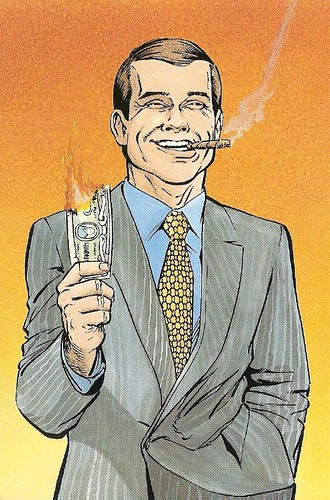
Maxwell Lord: The true Maxwell is an opportunistic sleazeball
with a great heart. He would manipulate and push so that his will is done; fortunately,
he always has the greater good and the best interest of his friends in mind. He
sounds like a used car salesman, the difference is that he always delivers what
he promises. He's the incarnation of the "Like a boss" meme; he works hard and he lives hard, always surounded by luxury. He's all charm, and yet, unlike the stereotypical sanguinean type,
he gets the job done without disappointments. He has a thing for power and
control, but his main reasons are his egocentrism and certain paternalist
feelings he has towards the JLI. As the boss, he's always has his eyes on the
ball and knows how to take charge without engaging (at least when it matters).
The Martian Manhunter: The leader of the oddest incarnation of the JLI also
serves as its father figure; while he seems to have a peer relationship with Batman and
Maxwell, he thinks of the rest as "the children". He knows human nature better
than humans so he’s very accepting and avoids engaging in nonsense and even
most of the social situations of the team. His attitude and personality often
places him as the straight man among the shenanigans of his team. As a leader
he's calm, insightful and patient and knows exactly what to say to lead this
weird wild crowd, always with his eyes on the ball.
Blue Beetle: Ted is creative, optimistic, enthusiastic,
adventurous, witty and a bit juvenile. He has a great, easy going temper, which
is why he's normally in great mood. His friends would say that he's hyperactive
and often too smart for his own good. He took the Blue Beetle mantle from his teacher, but
the truth is that he's a superhero out of his optimism and sense of adventure.
Like Ralph, he's a true example of emotional intelligence.
Fire: Bea is loud, fiery, flirty, fun loving and very hot tempered (a lot like Sofia Vergara or Eva Longoria). She's very street wise, has a quick wit, which helps her charm her way to get what she wants; however, she has no trouble calling things by their name.
In some stories, she has a Bart-Simpsonesque, devil-may-care attitude. She's a nudist who has worked in showbiz for men, yet she showed a smart taste in men (liking Oberon, hating Guy) and was quite protective of Ice's love life. Her deal in that sense seems to be that she uses her sensuality and charisma to get stuff but is very careful when it comes to feelings. Despite her hedonistic exterior she shows good, caring values when it comes to people. This is more evident with good kind people, like Ted, Ice, Mary or the Dibnys. By contrast she's tough on jerks (even if they are still her friends) and really tough on villains.
Booster Gold: He's basically a phony superhero that is perpetually
redeeming himself. For some reason, his goals as a superhero are fame and
fortune. He's shallow, shameless and often desperate; however, he always pulls
through. He's not much of a thinker, which makes him the perfect bottom of the
jokes (making him the perfect odd couple for Blue Beetle); however he has his
heart in the right place and has an amazing deal of determination, which are
the reasons that qualify him as a member.
Ice: She's sweet and caring; her borderline naive innocence
contrasts with Bea's sharp eye. She's utterly honest, transparent and, despite
certain shyness, she always shows her true emotions. However, she's not a bad
judge of character as much as she prefers not to judge, often seeing the
goodness behind rough exteriors like Guy's or even Bea's. Her sense of fun is
very child-like and playful, which makes her able to enjoy the simple things in
life.
Ralph: In JLI he became less of a Nick Charles
superhero and more of a funny, paternalistic uncle; going to extremes he never
went to get people to laugh. His behavior is more sanguine than ever, as if
he decided to take the back seat and relax in this team. His usual wit is still
there, but he starts relying on slapstick for humor. At the end of the day
people always listen to him and Wally even seeks his approbation. And it
figures, hiding behind a class clown surface he's indirectly mentoring and encouraging
the new Flash, Power Girl, Mary Marvel and even his wife, who became a member
of the team as well. Despite being acknowledged as the most experienced member of the European branch, he prefers being a good team member to being the leader, so he always respected Captain Atom's position as the leader.
Sue: She's the proof that sometimes spoiling
works. Despite having everything and being able to get whatever she whims, she
cares a lot about people. That's called vision of abundance. Her mood is usually great, she is very plucky, extroverted, chatty, witty and easy going; however, at times she can be high maintenance or show quite a temper, if the situation justifies it. Like Ralph, she is
only able to see opportunities and she makes things happen with even less
effort. She's a natural problem solver and her main weapons are charisma, charm
a quick wit and tons of confidence. As much as she trusts and admires her husband as a superhero, she usually fears for him and the rest of the team when they are on the field, which is the reason she likes to get involved. Before JLI she used to me mostly a
carefree, spoiled wife on an eternal honeymoon adventure, but then, a permanent
duty as monitor led her to become a technology wiz dedicated to her new team
and family, which she eventually lead as bureau chief.
Guy: Arrogant, overly confident, chauvinistic,
short tempered, annoying, obtuse and immature: the embodiment of the American
spirit gone wrong. He is only a hero because he believes in saving the day, and
he's too stubborn not to get things done. He's too much of an action man to
think things through. His m. o. seems to be all about bullying the bullies; the
problem is that he normally a dick to the good guys, even if he's ultimately
harmless and always gets losing. Ice is the only person that gets him to
rethink his ways.
L-Ron: Despite being more intelligent than his
bosses, he was created to be a servant, so he uses tongue-in-cheek, over-the-top
flattery (and often just sarcasm) as a form release. L-Ron seems to be doomed
to be an eternal witness to really bad ideas that he can’t prevent from being
executed, in fact he normally has to help making them happen. However, little
by little, he has moved to a position in which he can contribute to better
causes. He will always be a servant, but he'll at least try to serve where it
counts.
Power Girl: Kara’s super strength is not only physical
but emotional. She’s confident, emotionally independent and very outspoken;
however, her temper is short and might lose sight of what’s important in order
to make a stand. Even though his views are always fair, she engages easily and she can be quite opinionated, which put
her at odds with the likes of Guy. She has little tolerance for shenanigans as
well, especially when it comes to men objectifying her because of her notorious
sex appeal –she doesn’t flirt or dress
for men, but she also refuses to hide her beauty. She’s normally cranky, but
she can be quite generous and kind. When it comes to her work, PG has a great
determination that makes her diligent, quick and effective.
Rocket Red: Dmitri is a big jolly man, optimistic and
enthusiastic about everything. The type of person that rarely has anything
negative to say. Always with a smile on his face, he enjoys about everything,
and is loudly outspoken about it. He sees enough of everything for everyone,
which is why he has a very generous philosophy and nature. When it comes to
serious matters he’s very insightful and truly helpful to his friends. He has a
very balanced life and has a loving family waiting for him after work.
Crimson Fox: We’re talking about two women, but in general, their behavior seems the same. They like to remain a mystery to their teammates, so they are barely socialize and come across as “a” cold peer. They inform themselves about any situation and become all business right away; pretty much like Batman, only without barking orders. This is how they manage to hide the fact that they are two people sharing the same superhero identity. Like Batman, they seem too self-aware and even melancholic, but their determination and dedication to an agenda against injustice makes them overachieving perfectionist forces.
Catherine Cobert: A diligent and independent career woman capable
of great achievements. She’s such a straight man, she doesn’t even engage with
the nonsense of her team. Even though she is really dedicated and hardworking,
with her calm attitude and big picture sight she makes it seem as if her great
achievements came with little effort. Her great perception and sensibility
allows her to be as persuasive as Maxwell (which is probably why she e
eventually wet from being his great discovery to his boss). It’s also clear
that she’s very confident, and it also shows when she flits. While it’s clear
that she liked Captain Atom from day one (and that it was mutual), she rather
worked on him with friendship and teases without spoiling the tension.
Batman: A consumed pro with no time for nonsense. His
perfectionism feels sharper than ever and he has a heaver reliance on fear as a
weapon. He's playing on a really advanced level that few in the JLI can follow
and only J'Onn does. It would appear as if his respect only went to his equals
(J'Onn, Ralph, Fate, Canary) but he actually believes in all of them, so he
serves as an outsider who always knows
what to do and what to say (his mind seems to go at light speed), so he arrives
late, barks instructions and out he goes. He barely takes a few seconds to
correct Guy's attitude problem. Tough love. His field instructions have a
surgeon’s precision; however, after renouncing the leadership he decided to
respect the authority of the new field commanders. And yet, the team can't help
but feel as if he was the one pulling the strings (and he might be).
Other notorious members
Some members didn't really stayed that long but sitll became characteristic members of the Bwahaha era anyway.
Beefeater: Is a conceited, arrogant, phony, obnoxious, rude,
inconsiderate, stubborn, pretentious and absolutely sarcastic jerk. He can’t
help but show a neurotic behavior whenever he interacts; normally characterized
by his excessive complaining and attention to unimportant details. His constant
engaging prevents him from inspiring any real authority despite his confidence;
people rather please him in hopes to get him to shot up or go away. I know, I’m
basically describing Basil, but it’s the same, anyway.
Coming soon within this post: Captain Atom, Oberon, Mr. Miracle, Flash, Metamorpho, G'Nort, and Animal Man.
For more character profiles, check out the following articles:
Know your Justice Leaguer! Understand the personality of the early members of the World's mightiest team.
Brazilian Deviantartist, Daniel "Morpheus", created this Justice League International picture to see what a movie with his ideal cast would look like. Here is his pitch:
"This is a poster that I've made with my cast for a Justice League International Movie.
To direct the movie no one better than Edgar Wright (Shaun of the Dead). I always imagine this movie as a British comedy, with the perfect balance between comedy, drama and action.
I think the cast couldn't be better (how about that Mary Elizabeth Winstead?!! huminahuminahubba!!). I'm really sold on this idea. Very few actreses are charismatic and cute enough to play Sue, but only Zooey has what it takes. Lewis, on the other hand, has an odd face for Ralph, who should rather look like a young Dick van Dike; however, he has the built, the red hair and he can really pull clever. Winstead definitively has the body type (tall, curvy, great shoulders), but I'm not sure she can play a sassy, loud and spicy girl from Brazil. Tom Cruise as Maxwell Lord takes the prize. It's just brilliant; between his "show me the money" and this, Max definitively falls between Cruise's range.
I love how the picture integrates the most memorable members and elevates them as pop cult icons portrayed by contemporary celebrities. I just love that colorful reticule. Not to mention the impressive portrayals and their rendering.
That is a movie I'd like to see. I can even imagine the plot: The entire JLA but the Elongated Man gets lost in a battle against Despero and, after months of absence, Maxwell Lord recruits him for the new JLI, a project in which nobody has faith. Despite their limited competence, after accidentally saving Paris from a Bialyan attack (after the French had a misunderstanding with the Gadaffi-esque Rumaan Harjavti) little by little they gain the public trust. After gaining other battles (which will serve as opportunities for cameos by the Injustice League, Manga Khan, Starro and Mr. Nebula) and, with them, more popularity, they run into an a surviving Batman and the Martian Manhunter, who assign them a mission to rescue the rest of the real League. They accomplish their mission, but end up about to be blasted by Despero. However, the real JLA pulls a last minute deux ex machina. Finally, both leagues are restored, with Batman and the Martian as liaisons. How about that?
Anyway, there's more art where that came from. Daniel is a very gifted artist and is blessing us with a lot of samples of his art at his Deviantart page.
I found new fan art form favorite of this blog, Busterella, whose Dibny portraits always catch perfectly the true spirit of the couple. It's called "Superbuddies-Pokemon Rangers", check it out:
Top to bottom and left to right: Booster Gold, Blue Beetle, Sue and Ralph Dibny, Fire & Ice, Guy Gardner and Maxwell Lord.
It's the second pic I see from a Deviant artist combining elements of JLI / Super Buddies with Pokemon Rangers (which, I suppose, is a later incarnation of the Pokemon thing). However, there's no actual connection between the the two of them and I'm still trying to find out why is this a thing. According to Busterella, Pokemon crossovers with anything are common. She describes is as "Silly scribble-y crossover tomfoolery".
The other one is even more eclectic, it throws Aladdin and a character from Batman: The Brave and the Bold into the mix (what, no fire?).
Ice, the Dibnys, Guy and Captain America, Flash and his wife, Linda Parker, Aladdin and Jasmine, and the Music Meister.
Art by Clazziquai.
And this is just the tip of the iceberg, Busterella has impressive pics done with digital media. She's crazy-talented when it comes to coloring (you hear that, DC?). For more of her fantastic art, go to her Deviantart profile: http://busterella.deviantart.com/ . She's a talent to watch!
Like most of the characters in serial fiction, the Elongated Man's personality has suffered changes throughout time. As faithful as some can be, every writer has a different vision of the character. Even his fans have different perceptions of the ductile detective.
In his first six adventures, John Broome portrayed him as a superhero with an odd behavior. There wasn't much to his personality, only that he was a little more easy going that Flash (who was an easy going superhero himself). Neither of them gave the overly dramatic/heroic speeches that Batman or Superman use to give. Additionally, Ralph was eclectic and creative in his decisions. He didn't have a base operations, used his super powers to make a fortune, got married (which wasn't common for superheroes at the time) and gave up his secret identity.
Even though his dialogue is plain in these early appearances, his actions speak plenty for him. His temperament is established as primordially sanguine and secondarily phlegmatic. He's laid back and a great entertainer; he's rarely angered and always open minded and optimistic. His actions are bold and he is a success magnet: first, he arrives to Central City and, as a rookie, he overshadows the fastest man alive in his own game; he still becomes Flash's best friend; then, he becomes a showman and makes a fortune in a sec, retires, marries Sue Dearbon, a beautiful heiress, and starts to travel the World with her on a perpetual honeymoon. This extreme path of success follows them the rest of their adventures, throughout the 70s, 80s and 90s, they become intimate friends of the most powerful people in the DCU, he is awarded membership of it's most powerful superteam team (12th member and one of the longest staying) and he did all of that almost effortlessly and while having fun. Not to mention that she becomes a talented hacker, Bureau Chief of the Justice League Europe and a best selling mystery writer. It's a canon fact that Ralph Dibny takes the best in life and is very serious about enjoying every bit of it. However, he's very methodical and diligent.
During this period a mild enthusiasm for mysteries start.
Ralph begins to be portrayed as a detective in Flash #138, his 7th appearance.
After his 7th appearance, writer Gardner Fox took over and made him more eclectic, his enthusiasm for mysteries became love for them. He also became a bit of a laid back joker (nothing extraordinary), a media hound and a spoiling husband. He had a relaxed, "everything will work out" attitude since his first appearance, and it was only reinforced when his solo adventures started. He and his wife were modeled after Nick and Nora Charles, from The Thin Man film series. They would tease each other about their habits, but they respected and indulged each other's mild hedonism and had a drama-free marriage. This portrayal was kept during the 70s, in his Detective Comics and Justice League of America appearances.
Nora and Nick Charles, the main influence on the Dibnys.
The begining or Ralph's clowning.
During the 80s there was some exploration. When Batman retired from the JLA, writer Gerry Conway made Ralph the idea guy of the team; casually stating his deductions and suggesting plans of action. Meanwhile, Mike W. Barr proposed that his sense of humor was a defense mechanism to avoid thinking about the tragedy of the cases he often took. He also defined Ralph as a detective fiction expert, to the point that he was a World authority on Sherlock Holmes literature.
The Elongated Man meets his idol, the Great Detective.
In the late 80s, Gerard Jones, Mark Waid, J. M. DeMatteis and Keith Giffen accentuated him as a guy who loves attention, even if it takes slapstick humor and self deprecating jokes to get it. This is the way he remained during the 90s. In the early Justice League Europe stories, Giffen and DeMatteis had him as a witty guy who joked with his wife but also encouraged and appreciated her talent, they also explored his relationship with Wally West, the current Flash and the former sidekick of his best friend; when DeMatteis was replaced with Jones, the character development stopped and when Giffen left, he became an inept clown, by far, the worst and most destruct destructive portrayal of the character. My theory is that it ruined the character for other writers during the rest of the 90s.
Ralph portrayed as a really goofy character.
In 2003, Giffen and DeMatteis took away the slapstick and went back to witty humor with his wife, echoing their Thin Man influences.
His appearances in Justice League Unlimited was very similar to it.
Brad Meltzer made a serious and thoughtful sketch of Ralph as a person and husband in Identity Crisis and then, in 52, after the death of Sue, Mark Waid and Grant Morrison turned him into a more serious and detective. Both stories portrayed him as a really sharp detective, very similar to Sherlock Holmes in his method.
Ralph's portrayal in Identity Crisis #1.
Now, from what I perceive, fans of the Elongated Man share a common vision of the way he should be portrayed. We all seem to agree that, as Barr, Meltzer and Waid portrayed him, he's primordially a detective. I think that he should keep what I consider his two biggest influences Nick Charles and Sherlock Holmes. Since his first Detective Comics story, he became the type of sleuth that can make great deductions from observing details in scenes or people. Identity Crisis indicated that he's able to memorize all those details even under great stress. New stories should focus on this. Check it out, it can be really cool:
Despite his sanguine temperament, he's very methodical and diligent. He does stuff like memorizing details about people and scenes and he's rarely late or stressed by work, all trademarks of phlegmatic people. It wouldn't be a bad idea for the next writer to expand on his habits. I bet he dedicates part of every day to activities like practicing his memory skills, training his body, spending time with Sue, reading the news and, as Barr established, some detective fiction classics. Regarding his physical skills, the brightest observation I have ever heard from another fan is that he is likely to spend time every day on them. Training his body to get the most out of his super stretching: controlling mass, balance, shape, strength. Even his senses must be affected by this. Around the satellite era, he started to shapeshift to change his face, by the JLI era, he was able to create a bulldog head out of his hand.
There is also the matter of the extent of his super power. I has never been said, but the way he often made his hands huge and lifted men with each imply that he has super strength. Bigger hands don't have more mass, just the same mass in a bigger volume, which means less strength. An ability that has been mentioned but is not that famous is the speed of his stretching; some stories mention that he can reach dozens of feet within a fraction of a second, other show him using his knuckles or his chin as projectiles that knock out villains, which indicate an enormous speed and strength. Something that rare writers explore are the possibilities implied by stretching, like tuning his senses so that he could see, hear and smell beyond normal human capabilities. If he can stretch his chest and head cavities, he can basically produce any sound. He's also able to resist and absorb great impacts (he once stopped a truck). He has used his body as a rubber band (even serving as a bow for Green Arrow) and he can become thin as a sheet; in theory, this means that he can project himself into the air and then control his shape to navigate the wind (That's when he's not using his arms to move across the buildings like Spider-man).
When it comes to his sense of humor, consensus seems to indicate that it is a trademark that is should be kept. However, there are certain aspects from it that don't work. Here, Plastic Man is often used as a point of reference. He also became a big joker in the late 80s, only he was even bigger on slapstick; so it's commonly said that Ralph is like Jerry Seinfeld while Plas is more like Jerry Lewis (or Jim Carrey). Personally, given his profession, I think Ralph should have the observational humor of Seinfeld but with the quick wit of David Spade and maybe with the cultural references of Dennis Miller (EM strikes me as the kind of guy that pays a lot of attention to the news). Maybe a bit of Conan O'Brian's playfulnes wouldn't be so far from the Nick Charles mold. He's not the type that would make mean jokes about other people, but I can definitely can see him making "that's a shame" kind of comments about the goofiness of some of his friends.
I believe that a thoughtful portrayal that works expanding the trademarks that Gardner Fox, Mike Barr, Gerry Conway, Keith Giffen, J. M. DeMatteis, Brad Meltzer and Mark Waid left would make him a more solid DC character. Writers just need to use Ralph and Sue's rich profiles in classic detective fiction formulas (with the superhero twist, of course). They just need to do with him what TV has already done with characters like Nick Charles, Columbo, Jessica Fletcher, Poirot, Monk, Murdoch, Shawn Spencer or Patrick Jane. Cold open, crime scene investigation, a series of interviews revealing clues to the readers, intercalated comic relief shenanigans, reconstruction of events, climactic chase and epilogue or denuement (usually the regular characters solve their mild conflict of the day).
What gets a 30 years old dude obsessed about comic books? At least enough to make him to blog about his favorite character. Well, that's complicated. My bet is that nerd psychology is a very complex topic; one that I'm sure I'm not professionally qualified to discuss. I could research it and post some references and quotes -- but I don't wanna. Instead, I'm going to give you my top reasons for sticking with comics.
It is not really ranked according to a measurable rationale. A lot of simplistic reasons might be ahead of great art just because they came at the right time in my life. I hope you enjoy reading about them:
20. The Venture Bros.
Pure fun for nostalgic adults, showing sad versions of characters from DC, Marvel, Hanna-Barbera, VH1 Classic, pulp fiction and sci-fi films gone hilariously and pathetically wrong. The Venture Bros. made me realize that super beings are not black and white they are probably just losers trying to feel relevant. The characters, normally failures and shadows of what they used to be, go trough their existential crisis surrounded by a surreal remix of everything I watched on TV while growing up. They also save the day now and then, but that's mostly incidental.
Created by Jason Publick, a Tick alumnus, The Venture Bros. is like The Simpsons for geeks; every line is not only loaded with sarcasm and jokes but also a condensed of vintage pop cult references from the 70s and 80s (yes, even more than Famiy Guy). With so many Venture cosplay already happening in comic conventions, I can't wait to see how are mainsteam comics going to react to to it. 19. Identity Crisis, Hush, Batman/Superman and 52
After Batman: No Man's Land I was bored with DC Comics for a while. Understanding Comics reinfused me with love for comics, but not for DC. Our Worlds at War was so cloying, I gave up. What was Batman going to do next, anyway? Gotham was running out of disasters. But then, out of nowhere, everybody started to talk about the murder of Sue Dibny, and how great the mystery was, so I had to see what the fuss was all about. So I read it, and I loved it. It was a pull back, making the satellite era cool and relevant again. The characters that were most commonly associated with DC were at the front center again. To me, it looked like the actual DC Comics Super Friends facing their own secrets, fears and flaws.
Identity Crisis lead me to follow up with what seemed like a great DC bonanza of awesome stories in the same spirit: Batman/Superman, Hush, For Tomorrow and Formerly Known as the Justice League from before, and then with I Can't Believe It's Not the Justice League, Green Lantern: Rebirth, Countdown, The Dark Knight Strikes Back, All-Star Superman, All-Star Batman and Robin the Boy Wonder, Infinite Crisis, 52, Dark Detective, Brad Meltzer and Dwayne McDuffie's Justuce League of America run, Paul Dini's 'tec run, Grant Morrison's Batman runand Final Crisis. (Note that at the same time they were airing Justice League Unlimited). DC was shuffling it's greatest properties with the greatest talent available: Meltzer, Lee, Morales, Miller, Morrison, Dini, McDuffie, Waid, Hughes, Giffen, DeMatteis, Cooke, Johns. Yes, a lot of bad things were happening to some of the best characters: Sue, the Elongated Man, Rocket Red, the Question, Blue Beetle II, Aquaman, the Martian Manhunter and the original Ventriloquist died; Wonder Woman and Batman did some questionable things and Captain Atom and Maxwell Lord became villains. However, at the time it seemed to me that they were just making things darker before dawn. The return of Supergirl and other silver age elements seemed to indicate that with Infinite Crisis or Final Crisis
they would reboot DC to make it a brighter place with a reset. That never happened (to his credit, VP Dan DiDio did try, but he was blocked by higher powers); it was done out of time, too little, too late, too half way with Flashpoint and "the new 52" and I ended angry and disappointed, but I had a nice run and that's hard to deny.
18. Supreme
I used to think that, unlike Batman, Superman never really got his quintessential story in comics (maybe they should just adapt the Mario Puzo script and be done with it); that he doesn't have a Year One or The Dark Knight Returns. However, in the mid 00s I had the pleasure of discovering that I was wrong. Well, kinda. We can always squint and pretend that the Supreme stories by Alan Moore are it.
It seems like, at least by the 90s, Moore was a bit sick of torturing heroes with realistic tragedies that challenge their vision of what's right and wrong, so instead of a grim Superman, he made a pastiche of all the previous portrayals of Superman there had been so far.
Supreme is basically like Byrne or Jurgens' Superman facing everything he did under the most notorious writers that came before, mainly Otto Binder. In the story, we get a new Supreme entering reality after a revision; he goes through all the aspects of his past as he fixes loose ends and fights returning villains (part of the fun is trying to identify the DC characters that the supporting characters are supposed to represent). This way, the entire run, along with Judgement Day and other isolated issues, are the ultimate tribute to the process of comic superhero revision.
17. The Tick
SPOOOOOOOOOOOOOOOOONN!!!
I wish I could say that I know the character through its comics, but I was actually among the wave of fans that met the character through the animated series, which was part of a hype of superheroes in other media. After the success of Batman: The Animated Series, X-men and comics events like the The Death of Superman, Knightfall, Maximum Carnage, there was an era in which superheroes took over Saturday morning cartoons, now with a more serious tone than the series of the syndicated era (Thundercats, He-man, etc.). And The Tick did the exact opposite, showing a metropolis overcrowded with guys in tights so tight that their butt cracks were actually visible, only they were all neurotic, delusional and utterly incompetent and impractical nutjobs. And among them, generic within their own diversity, the Tick, whose name and costume didn't even make sense, was king. He was a nice, overwhelming, bigger than life, blue block with a Quixote attitude and a really small brain concealed by a really small head.
This cartoon was the first to show me that even humor has a place within superhero comics. Ever since The Tick, I've always been a fan of comedy with superhumans, which is probably why I just fell in love with JLI.
16. Freakazoid!
I can't believe nobody turned this property into an actual comic book! What are you waiting, DC?!
I still remember watching that first episode in shock: It was half Batman: The Animated Series, half Animaniacs, a bit Spider-man, and all surreal. Three of my favorite FoxKids shows in one!
It was fairly obvious from day one, but, eventually, I learned that it was originally about Bruce Timm, the creator of Batman: The Animated Series, pitching a series about a superhero version of the Joker, which then became more like Spider-man (which is why they have an unused Archie-like cast in the early episodes), ended as another Tiny Toons or Animaniacs type of show after he bailed and was then turned into a Monty Python type of thing. The best of the humor was done by Paul Rugg (who voiced Freakazoid) and good friend of the blog, John P. McCann.
It had it all: comedy, action, parodies, a terribly great rogues gallery, excellent art and even Henry Kissinger. What else could a kid want in a show? Laugh with me. Laugh with me!
15. Tim Burton's Batman
The 1989 Batman film directed by Tim Burton caused an epidemic wave of batmania among my generation. I got it and I got it pretty bad. I still remember the first time I saw it. I was siting a hammock with my brother and my cousin. My aunt, a good hearted spoiler by nature, was afraid that it might be too shocking for the three buggers, which is the reason we had to wait for the Betamax (it's a real thing, look it up) to come out. Along with Superman, Batman Returns, Who Framed Roger Rabbit?, Wayne's World any Star Wars and Back to the Future, it has to be one of the movies I watched the most.
Dark = cool. Although I still watched the wave of reruns of the 60s Batman show and Super Friends that came with the '89 batmania, anyway, but the lesson was pretty clear: the darker, the better. In the eyes of moviegoers, Burton's film lend credibility to superheroes. After it, both Batman and Superman had serious and acclaimed portrayals outside their original medium. Animation followed the example with Batman: The Animated Series and X-men, both of which inspires a lot of similar series. There were also the Batman film sequels and the similarly dark and serious (for the 90s) TV series of The Flash and Lois and Clark.
14. Teenage Mutant Ninja Turtles
As a kid, it was the awesome cartoon about charming turtles that fight other animal mutants lead by a ninja and an alien; as an adult it became an awesome pastiche of vigilante, ninja and sci-fi genres with an over the top B-movie type of title. Reading the original comics, wonderfully redone in the 2003 cartoon, feels like a roller coaster of never ending weird adventures; an aspect that the 80s cartoon never quite capture. Batman, Spider-man and most superheroes tend to fight the same villains in the same settings all the time, the the turtles went from ninjas on rooftops, to robots in the sewers, anthropomorphic triceratops in outer space and demons in medieval times. It doesn't get more surreal than that, which is why I love that the TMNT keep returning since I first watch them as an 8 years old kid.
13. Daredevil and Batman: Year One
I don't now if they are more "realistic", but the serious tone that Frank Miller added to classic vigilantes certainly increased their coolness and the sense of danger that we get from their adventures. Pulp fiction goes greatly with vigilantes. The Batman that I got when I started reading comics in the early 90s was mostly an echo of Year One. I didn't read the real deal (Year One, The Dark Knight Returns) until the late 90s and I just read Daredevil throughout the last decade, which is why I don't rank this higher.
I'm not sure how to describe them, although Miller went over the top with DKR, these works made superheroes feel solid, grounded and badass; something that is really hard to get from other writers. Besides, without Miller, we wouldn't have so many great stuff: The Teenage Mutant Ninja Turtles, the Burton and Nolan Batman movies, the post-Crisis Batman, Batman: The Animated Series, and, I dare to say, the British invasion and Vertigo.
12. Angry comics of the early 90s.
After the first time they ran Batman: The Animated Series and X-men, somebody from my classroom showed up with the Knightfall and Death of Superman translated trades (none of us understood English back then). They were Batman and Superman, the guys from Super Friends but they were "serious stuff", the "official versions", not for kids anymore (ha, ha, ha, ha, ha); which was really cool and mind blowing for the pack of pre-teenagers taking turns to read it in the class room. Knightfall caught my eye a bit more, with the run against all the villain characters I knew from BTAS and the 60s show. Then there was Maximum Carnage, The Reign of the Supermen, Fatal Attractions, Emerald Twilight and a number of trading card series, describing cool, tragic and really violent events in the lives of DC and Marvel characters, most of them incredibly pumped with skin tight costumes with lots of utility belts and coats. Yes, most of those stories are better forgotten, but all in all, they are what introduced me to comics.
11. Batman
I have to be fair with Adam West, Burt Ward, Burgess Meredith, Frank Gorshin, Vincent Price and the rest of those guys. That show was my first impression of DC Comics and the only concept I had of Batman until I first watched the Burton film (when I was 8).
I know it seems really silly now, but to a 5 years old, it looked about as interesting as it gets. And we shouldn't be too harsh on it, if something was proven by Batman: the Brave and the Bold, is that every interpretation of Batman is equally valid. Batman wasn't that different from the comics or even other TV shows of the era and it was even done by some of the finest Hollywood talent of the late 60s!
I sustain that it was a great gateway to DC comics. Bizarre villains with flashy costumes, over the top fight scenes, mortal traps and lots of riddles, what else could a kid want from a live action TV show. I liked Hulk and Wonder Woman as well but, without the colorful antagonists, I used to fall asleep after the first 10 minutes. I for some reason really liked the later when I was 14, though...
10. X-men
The power of "As seen on TV".
18 years ago, this animated series introduced me to the world of comics. As I mentioned before, it came along with a wave of trading cards and comic events that got me hooked on DC and Marvel. Batman: The Animated Series reintroduced me to superheroes, but it was too alienated within its own gorgeous and timeless universe. X-men, on the other hand, benefited from adapting the vast and wonderful body of X-men stories from the books; consequently, it was more of a middle ground between TV animated series and comics. Its art, continuity, stories and even its season format was a lot like the X-men comics of the time, which is something that was never done before and, now that I think about it, was rarely done afterwards in another series. About every character I saw in that series had an almost identical story in the comics, so, once I fell in love with them, it made a great transition to comics, where I could get even more of that candy.
9. The Dark Knight
I must have seen this one like 5 times in theaters. Batman (1989) was great, but it missed something. I love Michael Keaton's "I'm Batman" Batman, but it wasn't quite the Batman from comics (for starters, he killed). Batman Begins captured the best aspects of the contemporary Batman mythos, but didn't cause much of an impact. Now, TheDark Knight, hat it all. It captured the best aspects from the comics, it had the perfect Batman (well, save for the voice thing), caused a huge deal of an impact and on top of that, gave superhero movies a lot of recognition. Unlike Batman Begins, to me, this sequel not only lived up to Batman: Year One, it as actually better!
8. Bwahaha
I discovered it too late around 1995, but it was so awesome to see DC Comics characters acting almost as if they belonged to a sitcom or The Tick universe (both franchises were created about the same time), that I starting collecting whatever Justice League International (JLI) issue I could throughout the rest of the 90s. Formerly Known as the Justice League (2003) and I Can't Believe It's Not the Justice League (2005)became my favorite and I completed Justice League Europe eventuallyafter that.
Just like the DC-Vertigo characters make the DC Universe more exiting by having a really serious, surreal and eerie corner; the stories of Keith Giffen and J. M. DeMatteis do the same by adding a silly side. While guys like Moore or Miller deconstructed the superhero genre by grounding its world to realism, the JLI team kinda deconstructed it with the funny aspects of reality: our daily life comic situations, incompetency, gossip, vanity, bureaucracy, etc.
Also noteworthy is that when the average hero of the late 80s was pessimistic, violent and snarky, the Justice League, despite their flaws, were kind and, deep down, idealistic. They might joke about it, but in the end, even their sleazeball manipulative boss had a heart of gold. Ralph, Sue, Max, Ted, Michael, Tora, Bea, Guy, J'onn, Karen and Dmitri are some of the best characters DC has ever seen and Giffen and DeMatteis are geniuses for this take. It doesn't matter qhe other writers did with them, I'll always go back to those stories. (By the way, their recent Booster Gold run and Justice League Retroactive:the 90s, rocked just as much).
7. The DC-Vertigo characters.
Pushed by the success of X-men and, mainly, Daredevil, DC Comics responded by hiring some serious writing talent from wherever they came. First Len Wein discovered Alan Moore, then they brought Frank Miller from Marvel (not a Brit, though), and later, after they lost both, they headhunted Jaime Delano, Neil Gaiman, Peter Milligan and Grant Morrison. The body of work these people created, constitutes a dark and very sophisticated corner of the DC Universe.
When I was 20, it seemed to me that comics had nothing to offer. It was just Batman, Superman or Spider-man going over their rogues galleries over and over in adventures that every time seemed more dull to me. But then, I got a series of great tips that lead me to the works of Moore and the guys that followed in: Swamp Thing, Sandman, Animal Man, Doom Patrol, The Books of Magic, DC Universe: The Stories of Alan Moore, Hellblazer, Shade, etc. Along with the wave of new stories that followed Identity Crisis, these collections allowed me to keep enjoying DC Comics for many years.
6. The New Frontier
Good doesn't mean postmodern and dark. If the guys that can make great contemporary stories with superheroes are few, the ones that can make them also heroic and bright are even fewer. I'd say that Keith Giffen, J. M. DeMatteis, Mark Waid, Kurt Busiek, Alex Ross, Paul Dini, Dwayne McDuffie (R.I.P.), Alan Burnett, Bruce Timm, Alan Moore (after the 80s) and Darwyn Cooke are among the few storytellers that insist on the perpetuation of the modern (modern as in "before postmodern") and heroic portrayal that the DC superheroes originally had. Few of them work with the canon of DC Universe. There's Waid's The Silver Ageand Ross' Justice, but to me, Cooke's DC: The New Frontier is the flagship story. It was relevant, multi-layered and captured the true spirit of the DC superheroes.
I actually hoped that after Final Crisis the DC Universe would be rebooted to be more like The New Frontier or the Diniverse.
5. Scott McCloud
I'm telling you, this guy is the messiah of comics! Reading Understanding Comics opened my eyes to the full possibilities of the medium and made me a proud reader. Comics went from just being my guilty pleasure, to a form of art that I follow enthusiastically, "sequencial art". After years of being fed whatever DC and Marvel put on the shelves, I was finally able to appreciate the greatness of a number of writers and artists: Gaiman, Moore, Spiegelman, Miller, Moebius. And I still have a long way to go; DC has occupied way too much of my time.
Now, the day the mainstream industry realises that they need to do exactly what this guy described in Reinventing Comics, (oh, boy!) the medium will start reaching its potential. We need diversity!
4. Maus
Right after reading Understanding Comics, around 2001, I decided to get on the right path and read a monthly dose of decent comics, and this was on top of my first stack. McCloud couldn't be righter, Maus is pretty much the piece of storytelling that proves that comics can be great. In somebody else's words it is "at one and the same time a novel, a documentary, a memoir, and a comic book." It's the Godfather of comics; few or no movies are as tuching or compelling as this humble story of a Jewish survior of the holocaust, written and narrated by his own son during the last days of his life. Once I started, I wasn't able to drop the book and I think I made averybody in my family read it, ha, ha.
At the same time, it's a homage to the possibilities of comics and its redemption. Its style is quite cartoony (they are all cute animals), which makes a high contrast with the harshnes and realism of the narration. Incidentally, this way it becomes the utter proof that comics and cartoons can be an effective vehicle for trascendency.
3. Super Friends, the pop art of José Luis García López and the Justice League of America.
When I was a kid, the Super-Powers Collection with José Luis' art was everywhere. In my shirts, in my lunch box, under my pants, everywhere. I knew Batman and Wonder Woman from their live-action shows and Superman from the movies, but then one day I saw this:
It was crazy! They were all there, in one single show (even the Joker!)! I loved it, a show about a team consisting of what, to my 7 years old self, seemed like every popular superhero there was! It was like a super TV crossover, which seemed even more relevant done as a cartoon (cartoons, of course, are more important to kids than boring stuff, like live action or the World events). I also loved the colection of muscled dudes and dudettes in tights.
However, I only caught a couple of episodes before they started with the reruns of regular Super Friends, which was painfully boring to a kid of the Transformers, Ghostbusters and Thundercats era. The ones without the Legion of Doom or even real supervillains were even worse (somehow, even then I was able to tell phony made up villains from the official ones). It got better with Firestorm. And then there it was again:
(Play it, just humor me).
And there it is again, the Joker! (instead of that lousy Riddler). It had Cyborg and his really cool bromance with Firestorm, and impressive episodes line The Fear, The Death of Superman, the one in which Mr. Mxyztlk makes more Bizarro duplicates or that one with the Penguin and Felix Faust stealing Superman's powers! Man! Those were good times to be a kid! And it got better: there was an action figure collection with most of those characters!
Later, when I started reading comics in the early 90s, I was disappointed that a number of things from this show, were not there, like Apache Chief, Samurai, the Justice League roster, even Firestorm was kind of absent. Luckily, I discovered back issues some time later. To me, the perfect image of the DC heroes is still a combination of José Luis' art, the Super Powers Collection and the satellite era of the Justice League of America. To me, DC is this (no, it's not the opening theme again):
2. The Elongated Man & Wife
My weird obsession with this couple doesn't go that far back. Formerly Known as the Justice League and Identity Crisis made me notice the non Plastic Man guy that was always hanging with the league in the big events of the early 90s. I was like "yeah, I remember that guy". I didn't even knew his real name before that - Spanish translations he was known as el Hombre Elástico (Elastic Man). The DeMatteis / Giffen / Maguire made me like the Dibnys and [ïronically] Brad Meltzer made me care about them. Once I realized that the Elongated Man got his powers from a fictional fruit that grows in my native Yucatan, I got really interested and, after reading Showcase Presents: the Elongated Man, it was decided: the Dibnys became my favorite characters. Handled directly by Julius Schwartz, John Broome, Carmine Infantino, Gardner Fox and then Len Wein, they were rooted at the heart of the silver age. As eclectic, eccentric and hedonistic as they are, they are the best examples of emotinal intelligence DC has to offer, which is something I deeply admire. They are honest, goodhearted, creative, generous and, unlike most of the average DC characters, they are not just reactive to to the drama, they are proactive, love what they do and live a plenty life.
See what I mean?
1. Batman: The Animated Series and the DC Animated Universe
(a.k.a. BTAS and the DCAU)
Can you believe that Bruce Timm was once rejected from DC comics? Yet, somehow, he managed to revolutionize aimation in a series that marries the Batman tradition with a sophisticated retro but fresh style. As far as I'm concerned, Bruce Timm, along with Paul Dini, Eric Radomski, Alan Burnett, Stan Berkowitz, Glen Murakami, Andrea Romano, Darwyn Cooke, Dwayne McDuffie and many others, created an universe that is actually better and more elegant than the regular DC Universe. Superhero cartoons were never taken seriously until this series came. The content of BTAS is not just for kids, but for all ages.
As I said before, Batman: The Animated Series, made me rediscover the DC characters and was my main reason to start collecting the comics; however, I never loved them as much. After the third episode I saw I was officially obessed. For over ten years I only drew imitating the style of Bruce Timm. I made tons of turnarounds trying to adapt classic DC characters to his style. A lot of people still do the same, and even DC decided to change characters like Metallo, Supergirl or the Parasite to look like Timm's designs. I only read comics because they were the best next thing after reruns.
One of the greatest things about the BTAS universe, is that it kept coming back with different angles. First it was Batman: The Animated Series, then, with more Robin it became The Adventures of Batman and Robin, the next series; Superman: The Animated Series, repeated the original formula with a new main character, The New Batman Adventures had Batman leading a team of Gotham Knights (Robin II, Nightwing and Batgirl); Batman Beyond deal with their distant future and Batman's legacy, The Zeta Project expanded that futuristic universe; Static Shock, a series about a teenage hero dealing with juvenile gangs,became linked to this DC animated Universe (DCAU), and finally, they did Justice League, which became Justice League Unlimited and tied all the events and characters of the previous series.
There were also four movies: Batman: Mask of the Phantasm, Batman & Mr. Freeze: Sub-zero, Batman Beyond: Return of the Joker; and Batman: Mystery of the Batwoman.
Justice League Unlimited was like going out with a bang. It featured a really large cast that included almost all the DC characters I wanted to see, a lot that I'd have never expected and a bunch that I didn't even know. It was like a child fantasy come true. Like Super Friends, but with better art, better writing and a hundred times more characters.
One of the coolest aspects of the DCAU is that it actually had epilogues, unlike the reguar DC universe, it told the full story of a lot of its protagonists: Batman, Robin, Batgirl, Lex Luthor, Darkseid, the Joker, Harley Quinn, Superman, Grodd, John Stewart and Amanda Waller.
All this work was produced in 14 years, and all that time I kept returning and being further introduced to the characters of DC. BTAS could have been a fad, like the Teenage Mutant Ninja Turtles or The Ghostbusters before it, but it kepts returning with series lived up to the established quality, so, the DCAU kept me hooked, loving the wonderful world of DC.

 Maxwell Lord: The true Maxwell is an opportunistic sleazeball
with a great heart. He would manipulate and push so that his will is done; fortunately,
he always has the greater good and the best interest of his friends in mind. He
sounds like a used car salesman, the difference is that he always delivers what
he promises. He's the incarnation of the "Like a boss" meme; he works hard and he lives hard, always surounded by luxury. He's all charm, and yet, unlike the stereotypical sanguinean type,
he gets the job done without disappointments. He has a thing for power and
control, but his main reasons are his egocentrism and certain paternalist
feelings he has towards the JLI. As the boss, he's always has his eyes on the
ball and knows how to take charge without engaging (at least when it matters).
Maxwell Lord: The true Maxwell is an opportunistic sleazeball
with a great heart. He would manipulate and push so that his will is done; fortunately,
he always has the greater good and the best interest of his friends in mind. He
sounds like a used car salesman, the difference is that he always delivers what
he promises. He's the incarnation of the "Like a boss" meme; he works hard and he lives hard, always surounded by luxury. He's all charm, and yet, unlike the stereotypical sanguinean type,
he gets the job done without disappointments. He has a thing for power and
control, but his main reasons are his egocentrism and certain paternalist
feelings he has towards the JLI. As the boss, he's always has his eyes on the
ball and knows how to take charge without engaging (at least when it matters).


 Power Girl: Kara’s super strength is not only physical
but emotional. She’s confident, emotionally independent and very outspoken;
however, her temper is short and might lose sight of what’s important in order
to make a stand. Even though his views are always fair, she engages easily and she can be quite opinionated, which put
her at odds with the likes of Guy. She has little tolerance for shenanigans as
well, especially when it comes to men objectifying her because of her notorious
sex appeal –she doesn’t flirt or dress
for men, but she also refuses to hide her beauty. She’s normally cranky, but
she can be quite generous and kind. When it comes to her work, PG has a great
determination that makes her diligent, quick and effective.
Power Girl: Kara’s super strength is not only physical
but emotional. She’s confident, emotionally independent and very outspoken;
however, her temper is short and might lose sight of what’s important in order
to make a stand. Even though his views are always fair, she engages easily and she can be quite opinionated, which put
her at odds with the likes of Guy. She has little tolerance for shenanigans as
well, especially when it comes to men objectifying her because of her notorious
sex appeal –she doesn’t flirt or dress
for men, but she also refuses to hide her beauty. She’s normally cranky, but
she can be quite generous and kind. When it comes to her work, PG has a great
determination that makes her diligent, quick and effective.
 Crimson Fox: We’re talking about two women, but in general, their behavior seems the same. They like to remain a mystery to their teammates, so they are barely socialize and come across as “a” cold peer. They inform themselves about any situation and become all business right away; pretty much like Batman, only without barking orders. This is how they manage to hide the fact that they are two people sharing the same superhero identity. Like Batman, they seem too self-aware and even melancholic, but their determination and dedication to an agenda against injustice makes them overachieving perfectionist forces.