Showing posts with label Hawkman. Show all posts

Wednesday, July 4, 2012

Know your Justice Leaguer


In a previous article, I made the personality profile of The Elongated Man. Knowing what makes a character tick is what makes them interesting. The bad (or the badass) seems to be the flavor of the day since the late 80s. Everybody needed to be like Rorschach, Batman or Wolverine to be cool. But that’s not good writing, just selling fool-proof hooks that can be pulled even by the lesser writers.
Good writers know how play with personality traits in order to sell any character. Take Lord of the Rings: The Two Towers, as instance, Tolkien and Jackson, managed to make a pop cult icon out of Gollum, a petty worm who is the very antithesis of any type of alpha male. The most read book of all times is about a loon that sees windmills as villains. The most popular sitcom is about four neurotic misfits… The trick is to know the character and to know how to exploit his personality traits.
With that in mind, I give you a list of sketches the most notorious members of the Justice League. My focus is on temperament, which I consider the very core of a person’s attitude.


Aquaman: His personality has wildly changed in some media; however, in comics, he’s most commonly portrayed as a tough yet melancholic, no-nonsense guy with a lot of weight over his shoulders. That crown is heavy.
He has an old soul. Like Batman, his eye for detail is just as sharp as his eye for the big picture. He’s extremely loyal and noble, but he doesn’t waste time on lost causes.
Within the League he sits among the other "kings": Batman, Superman, Wonder Woman and the Martian Manhunter. I just happens.
Other versions have him as a merrier guy. Batman: The Brave and the Bold even gave him a loud, bigger than life personality, very similar to the Thor of the 2011 movie. It’s not the original deal, but I kind of like this better, even if toned down a bit.

The Atom: It is ironic, but the smallest man alive, often feels like a small man inside. Despite being a genius and having one of the greatest super powers, he tends to feel guilty and undeserving, making him the most typically melancholic member of the team. He’s very creative and escapes everyday life through science and superheroics. He pulled the whole superhero thing for a woman, who doesn’t seem to appreciate him that well, which doesn’t speak well of his self-esteem. Hawkman, his best friend is also bossy and overly confident. The second he gets out of his lab, Ray Palmer tends to give a lot, expecting nothing in return.
He loves his role as the idea guy of the JLA, he's no tactician, but when it comes to tehnical matters, hes the go-to guy.
However, he is sometimes portrayed as an absent-minded genius with little interests outside science; your average Egon Spengler, Gyro Gearloose or Mr. Fantastic.


Batman: A compulsive melancholic who is obsessed with perfection. Fueled by survivor’s guilt, makes sure he’s the best at everything he does, including being the ultimate alpha. He’s very methodical and needs to control people and information alike. Years of practice have made him faster when it comes to acquiring new skills. He is able to act like a very social person as Bruce Wayne, but that’s all it is, an act. He has deep trust issues and can’t communicate affection properly to his loved ones (even though he is not that bad at hinting it). His most significant love affair is with Catwoman, who is just as distant in her own way. 
Working with the JLA, he arrives late at the Watchtower, takes charge, solve the problem and goes back to Gotham.
During the silver age, both as Batman and as Bruce, he was more civic-minded, polite and preachy. This characterization was reused with some added coolness in 
Batman: The Brave and the Bold.

Black Canary: She’s an overachiever, focusing all her dedication and discipline in continuing her mother’s legacy as a superhero. Mother issues and poor taste in men are perhaps the biggest aspects of her personal life. Opposed to Green Arrow, she’s also a strong, independent woman with feminist values. She works her ass off; Hal would just get the job done right with the best  tool available, and then hit the bar; by contrast, Dinah would do hours of exhaustive practice, almost as intensively as Batman. She plays hard to get, but she is no Catwoman. Ollie is her weakness; she demands a lot of herself only to fall for the resident ladies man. Her temperament is a bit melancholic, but phlegmatic enough to have great people skills, which makes her a perfect field leader.

The Elongated Man: The guy is all about doing what he loves and getting some attention while he’s there, by far, the most laid back out of the classic leaguers; a perfectly sanguine type. He’s quite diligent but wastes no extra energy to get the job done; he’s so practical that in his debut, he proved to be a faster crime-solver than Flash himself. He can solve anything Batman does – only with fewer resources and more lateral thinking. He's often the one who humbly presents a practical solution when the team seems to be up against the wall (even more often when Batman is not around). 
Out of the entire league, he’s the one that makes the most assertive life-choices and avoids drama the best. Ralph is a fun guy who managed to get the money, the girl, the fame and the status on his first day and then saves the world merely by “stretching at the right time”.

Firestorm: Ronnie is frat guy with a heart of gold. Being analytic never worked for him, so he focused on fun and what makes a male kid popular, but then, he got a challenge and was forced to change his ways. His fusion with Professor Martin Stein is like a permanent, intensive and forced mentorship that forces him to overcome that one aspect of his life he used to neglect. The way he acts, he looks self-secure, yet, he’s overcompensating for his lack of intellectuality, which he is overcoming as Firestorm. The JLA became even more reinforcement. Starting with Superman, they believe in his potential. He's the rookie of the team and when it came to fitting in, Ralph often took him under his wing.  


The Flash: One of the hardest to define for many people. He’s all about diligence and a huge sense of civic duty. His temperament is somewhere between phlegmatic and melancholic. He feels the need to complete great task and to do it step by step and by the book, often missing the forest for the tree. However, he can still be very creative. He’s very similar to Superman, only less bold, more humble and more of a side thinker. And while Clark pretends to be boring, Barry is the genuine article.

Green Arrow: This one is all about character. He’s sanguine like Hal, only with a shorter temper, savvier and more stubborn. He relies heavily on common sense and cynical observation to the point that he is perhaps the best judge of character in the League and, even though he’s about as old as the rest, he’s seen the “old devil” of the team. 
He was born with a silver spoon in his mouth, and yet, he’s so stubbornly liberal that he became the most socially aware JLAer; he’s the guy that often keeps the rest grounded. To him, watching out for the little guy is way more important than defeating the bad guy and his teammates appreciate him for that. That being said, he can also be patronizing, flawed and a bit chauvinistic. The fact that he’s an idealist doesn't mean that his behavior is perfect as a person, especially when it comes to women.

Green Lantern: The guy is the epitome of the charming alpha male. He likes, he takes. He shoots, he scores; very good at saving the day, getting the girl and having a great time. However, like a good sanguine (and unlike Ralph), he is not that great on the long term. Hal can’t keep the girl and doesn't really climb the job ladder, even when he has all the opportunities there. He probably feels a bit undeserving under all that cockiness.

Hawkman: He is a tough alpha male; nerves of steel, sharp, to the point; never misses a thing and he is always talking with authority. He never backs away from his frame. His views are often the toughest of the team. He and his wife might walk around bare-naked, yet he is very conservative (Republican in fact), overprotective with women (at least one time with Black Canary and often with his wife) and he takes the most aggressive stands on punishments.
As serious as Katar is, the ones that get close to him like Hawkgirl, the Atom and Elongated Man, can get him to show his lighter side.  That being said, he can’t stand Ollie.


Superman:  I always say, when your father treats you as if you were Superman, you end up flying. This is literally the case with Clark. He comes from two great sets of parents, the first gave them his genetic characteristics and the double gift of life and the second raised him as an assertive man with great values. He might feel the weight of the World when it comes to do the right thing with his powers (especially in the last decades), but classically, he does good because he truly likes and believes in kindness, Midwestern, all-American kindness.
The big difference with Barry, is that he is not as pressured by guilt, and that, as Clark, he only pretends to be a square. When it comes to Lois, he barely minds her aggressive exterior; he can only look at her great fiery heart.
In general, he’s easy going and calm. Modern interpretations have him more introspective, early ones had him self-righteous and the ones from the silver age, had him more easy going and even more chivalrous, with a slightly geeky sense of fun.

Wonder Woman: She is like Athena or King Solomon: graceful, merciful, assertive, proper, respectful, wise, kind and as self-secure as the archetypal good monarch. Generally calm and nice, she has no trouble being aggressive and taking the bull by its horns when the situation requires it. I would say that she is the best leader a team can have (keep in mind that leadership rotated in the original JLA).
With so many attributes everybody is in love with her; yet, she has something that prevents most from hitting on her. At some points she has been attracted to the idealist Superman, and at least an interpretation has had her with a thing for the more magnetic Batman; however, the guy that gets her heart (Steve Trevor)  is a suave gentleman with the right cause.

Zatanna: She is a crowd pleaser, loves the attention and manages to get that with her charming personality. Since she was created, there has always been constant drama on her life, she is always missing something, which tells me that she is a bit codependent. She’s mostly sanguine, having fun and going with the flow; however, she also has some supine and melancholic characteristics. Between the lines, I have noticed some daddy issues in her persona.


Did you like the character profiles? Here are some more:

Know your Super Buddy!
Blue Beetle, Booster Gold, Fire,  Ice, Sue, 
Maxwell and the rest of the late 80s gang!

Know your Bat-Villain! Part I - 
Probably the craziest supervillains in 
American comics, so it is a longer read.

Sunday, November 20, 2011

Art for Absolute Identity Crisis: BOO-YAH!!

Front center, a great place for the World-famous Elongated Man.
This page was created for the cover art of Absolute Identity Crisis released October 12th, 2011. This has to be the greated thing DC has done for the Elongated Man this year.
Artists often forget how tall is Ralph supposed to be, but that's clearly not the case here.

Tuesday, September 13, 2011

The End of the DC Universe!

The other day, I saw a thread in the DC message boards that got me thinking about the kind of endings that I'd like for the characters of the current DCU. Here's what I came up with:

Green Lantern
Sinestro finally gets Oa destroyed, but he loses his own life in the process. Kyle, John, Kilowog, Soranik, Salaak, Arisia, Ch'p, Katma, Tomar Re, and Sodam become the new Guardians of the earth battery, which only survived because Hal merged with the light.

The Flash
Barry Allen returns after surviving the Crisis on Infinite Earths. Realizing that Central City has long moved on after he disappeared and that Earth is safer than ever, he moves to the future with Iris [so that his climax is CoIE but he still gets his happy "silver age" ending]. The Rogues retire and Wally remains the guardian of the city.

The Atom
Ryan and Ray find a way to cure Jean from her Jimbaran relapses. Ray decided to retire as the Atom to focus on his marriage.

Justice League International
Booster Gold makes the ultimate sacrifice, which only a resurrected Ted will ever acknowledge. Ted becomes the new "Maxwell" of the last JLI [it's a switcheroo deal topped with a "Greatest story never told" situation], which also has Fire as its field leader. Ice retires to have a family with Guy... What none of them ever find out is that Maxwell's actual brain remains in his old cyborg body; he retired long ago and has lived with L-Ron and Wanda managing a Manga Khan space resort ever since.

Wonder Woman
Wonder Woman saves USA from the wrath of the Gods, her body becomes a statue at Washington and Zeus gives her soul, along with Steve's a place in Mount Olympus [CoIE + Greek tragedy].

Batman
The Joker and a small gang of old time criminals push Damian betray his father and Terry. Damian sacrifices taking the Joker with him. Eventually, Bruce dies by Selina's side surrounded by Terry, Barbara, Dick and Tim [It's a legacy thing, he made a difference]. He's buried by them, along with the remaining leaguers and the Batman Inc. Corps.

The Elongated Man
Ralph and Sue keep solving DC mysteries forever [Quantum Leap, anyone?]. Billy Warner becomes the best detective of his generation, the Detective Chimp invites him to join the Croatoan Society.

The Martian Manhunter
The Martian Manhunter retires to live with a single mother and her daughter [is, he embraces humanity]. They die at the same time from natural causes.

Green Arrow
Dinah and Ollie remarry, only to get divorce the next year after that. They remain a couple. They have a daughter; she becames a registered Republican and wants nothing to do with superheroes.

Hawkman
It took a thousand reincarnations, but Hawkman and Hawkgirl finally complete their lives without early tragedies.

Zatanna
Zee finally starts a drama-free relationship with a normal guy and retires [she got over her daddy issues]. She becomes a hot soccer mom. Her kid is teased because there are a lot of "glamour" pics of her mom all over the Internet.

Starman
Not an important character, but Starman sacrificed himself to save Earth from his own race [Ziggy style], which were actually mutants created by the Spiders from Vega.

Aquaman
After Aquaman achieves great peace between Atlantis and the rest of the World, and a lot of prosperity emanates from his county, he dies in a fight against One's son, who was then killed by Garth, who was, at the time, considered a traitor to the kingdom. This way, Garth gets this way his redemption, as well as the forgiveness of Meera and Atlantis. He is finally allowed to reunite with his Atlantean wife: Arthur's daughter.[something Arthurian without making Mera a **** or dragging swords and lakes into it].

Black Lightning
Black Lightning reveals his identity and becames Mayor of Metropolis [he finally made the difference. Would President be too much?]. The Suicide Slum becomes the Suicide District, the cultural center of the city (real state agents keep trying to push for "Simon Heights", but nothing). He puts on his wig for one more fight along the League after that.

Metamorpho
Java takes one of Simon's plan to the extreme, and kills Sapphire; Simon kills Java trying to save her. Although old habits die hard, Simon rejects his own selfishness for her and his grandson; Metamorpho accepts himself in order to provide a role model for his son, he gets Simon's frequent cooperation as a grandfather.

Justice League Unlimited
The Justice League is carried on by Terry.

Superman
Mr. Mxyzptlk puts Superman him through some ultimate test of morals and courage. He passes and the imp alters reality so that his enemies fade away. However, many years later, Luthor returns and things too far in order to destroy him (probably something involving the Anti-Monitor technology from Crisis on Infinite Earths). He is a shell of a man, merged with Brainiac, Amazon and Metallo technologies, and he makes Superman chose between sacrifice or the destruction of all reality. Superman chooses the former and dies. Right then, after realizing that he has lost his humanity and has almost destroyed everything he ever cared about in the process of eliminating him, Luthor commits suicide. It turns out this was Mxyzptlk's real test. He pops up again to restore everything, only this time he leaves Clark without his powers, thus lifting the overwhelming responsibility from his shoulders, so that he finally has no other choice than to spend the rest of his days living a normal life with Lois and their half Kryptonian son. Karen retires to lead her own life with her family. Kara married Jimmy and along with Krypto, she proudly carries Superman's legacy.
The Kents retire to live in the old Smallville farm. Every day Clark looks more like Jonathan. 

Monday, September 12, 2011

Surviviors of the Golden Age!

The Golden Age has little to do with the Elongated Man; however, a little reference could help understand the Silver Age, which is the context of the character. Besides, the Golden Age is the is the historical dawn of the superhero genre. Without Superman and the golden age of superhero comics, there would be no Elongated Man.
After a couple of Jewish kids from Cleveland managed to convince National Allied Publications (DC's name back then) to publish the adventures of their super powered man in blue tights with a red cape and underwear over it, dozens of similarly dressed super heroes popped up in the then-booming American comic book industry. Comics already existed, so did characters like Slam Bradley and Dr. Occult, but Jerry Siegel and Joe Shuster's creation was largely the inspired some of the most notorious DC characters:
  • National ComicsBatman, Green Arrow, Aquaman, Speedy, Robin, Crimson Avenger, Zatara, Sandman, the Spectre, and the Guardian, Hour Man, Robotman, TNT, Dan the Dyna-Myte, etc.
  • All-American Publications: Wonder Woman, Flash, Green Lantern, Atom, Hawkman, Hawkgirl, Dr. Mid-Nite, Sargon, Johnny Thunder, Black Canary, Wildcat and the humorous Red Tornado.
All-American added a lot of properties to the market, but was absorbed by National Comics in 1944. One way or another, the most notorious properties of both teamed-up as the Justice Society of America.

Likewise, a lot of companies were doing the same. Some were bought by National Comics at different during the silver age (I mean, before 1985):
  • Fawcett Comics: Captan Marvel and the Marvel Family, Spy Smasher, Bulletman and Bulletgirl.
  • Fox Comics: Blue Beetle.
  • Quality Comics: Plastic Man, Uncle Sam, Phantom Lady, Manhunter, Doll Man, Doll Girl, Human Bomb, the Blackhawks.  
Additionally, there were the characters of Timely Comics (eventually Marvel), Nedor Comics, Centaur Comics and Archie Comics.

By the late 40s the industry started shrinking, a lot of characters and titles were cancelled, including a lot of National Comics' and  almost all of All-American's, with Wonder Woman as its big exception. The most notorious survivors of the Golden Age of DC Comics were:  
  • Robin Hood and the Sherwood characters (New Adventure Comics #23, January 1938).
  • Superman (Action Comics #1, June 1938), along with him Lois Lane, Jimmy Olsen, Perry White, Lex Luthor, the Prankster, Mr. Mxyzptlk, Toy-man, the Puzzler.
  • Batman (Detective Comics #27, May 1939), aong with him Comissioner Gordon, Hugo Strange, Robin, the Joker, Catwoman, the Scarecrow, the Penguin, Two-Face, the Cavalier, Tweedle Dee and Tweedle Dum, the Mad Hatter, the Riddler. Alfred was switched from Beagle to Pennyworth at some point. 
  • Wonder Woman (All-Star Comics #8, Dec. 1941), along with Steve Trevor, Etta Candy, Ares (often "Mars"), Cheetah, Dr. Psycho, Giganta and Angle Man.
  • Aquaman (More Fun Comics #73, Nov. 1941). 
  • Green Arrow and Speedy (More Fun Comics #73, Nov. 1941). 
  • Congo Bill (More Fun Comics #56, Jun. 1940).
The titles or features of those characters survived through out the 50s, in which the industry was damaged even more by McCarthism, the efforts of Dr. Fredric Wertham and the Comics Code Authority, all of which caused the comics to be heavily censored. Plots became childish and often ludicrous. Additionally, by the mid 50s the focus concentrated on space and sci-fi, do even Batman started to fight alien invaders. This is the early Silver Age period, and it's around this point, 1956, that National Comics (known as "Superman - DC") decided to reintroduce the Flash. Only this time they decided to change his identity. The original Flash was last published in 1949, so the man responsible for this, editor Julius Schwartz felt that it was necessary to reintroduce the character to the new readers of the time. He also felt the need to update him for the 50s. Consequently, the new Flash kept his powers, name and even started his adventures with one of his main villains (the Turtle became Turtle Man); however, his secret identity wasn't Jay Garrick, the college student from Keystone City, but Barry Allen, the police scientist from Central City.

After the success of Flash, National revived old properties in the same fashion with different identities: Green Lantern (1959), Hawkman, Hawkgirl and the Atom (1961); all of them were All-American characters and the the sources of their super powers relied more heavily on sci-fi elements. 
Hawkman and Hawkgirl (Flash Comics #1, Jan. 1940) got almost identical Earth-One counterparts for the Silver Age in 1961, including very similar uniforms and the same civilian names, only their back-story was completely changed. In the Golden Age, they are reincarnated royalty of ancient Egypt; in the Silver Age, they were aliens. One of their enemies, James Craddock a.k.a. the Ghost, also got an almost identical counterpart, this time called the Gentleman Ghost.


New characters created around this era include the Martian Manhunter (1955), the Challengers of the Unknown (1957), Adam Strange (1958), Speedy, Aqualad, the Elongated Man (1960), the Metal Men (1962), the Doom Patrol, Mera (1963), Zatanna, Teen Titans and Wondergirl (1964) and Metamorpho (1965). Zatanna is a very curious case, since she was daughter of Zatara, a Golden Age character.

Another important revamp of this era is the Justice League of America, which took the premise of the Justice Society to a grander scale, starting its roster with the most popular superheroes of DC at the time (Superman, Batman, Wonder Woman, the Flash, Aquaman, the Martian Manhunter and Green Lantern) and then increasing it with the best next characters (Green Arrow, the Atom, Hawkman and eventually Black Canary, Elongated Man, Red Tornado, Hawkgirl, Zatanna and Firestorm).


The practice of creating new versions of the Golden Age heroes slowed down after the creation of the new Atom. The probably because, exactly the same month, August 1961, Jay Garrick was reintroduced in the pages of Flash. It was then explained that the adventures of the contemporary superheroes took place on a reality "Earth-One" and that the old Golden Age ones were alive on "Earth-Two". The characters from Earth-Two started their superheroic careers between 1938 and 1943 and the ones from Earth-One around 1954.

The creation of this alternative realities allowed DC to keep using its old properties without the need for much introduction. Black Canary, for instance, became a member of the JLA simply by moving permanently from Earth-Two to Earth-One. However, as we have seen, the occasional revamp was still done after this point:
  • Robotman (1963)
  • Red Tornado (1968)
  • Manhunter (1973), and 
  • Sandman (1974). 
DC also did the opposite with Power Girl. After the concept of Earth-One and Earth-Two was introduced (along with many more Earths that conformed the 'Multiverse'), they eventually started doing stories completely set on Earth-Two, so they decided to create Power Girl, counterpart of Supergirl, a widely popular character, originally created as supporting cast of Superman during the Silver Age. They are both the cousin of the Superman of their respective Earths, only PG is older and has a bigger and more voluptuous body. Huntress is perhaps the analogue of Batgirl, only with a completely different background as the daughter of Bruce Wayne and Selina Kyle.

It's important to consider that a number of characters debuted in the late 40s and the 50s and kept appearing at least during the early silver age. The transition was gradual:
  • Tommy Tomorrow (Rea Fact Comics #6, Jan. 1947). 
  • Pow Wow Smith (Detective Comics #151, Sept. 1949).
  • Deadshot (Batman #50, Jun 1950).
  • King Faraday (Danger Trail #1, Jul 1950).
  • Darwin Jones, Chris KL-99 (Strange Adventures #9, Aug. 1950).
  • Killer Moth (Batman #63, Feb 1951).
  • Captain Comet (Strange Adventures #9, Jun. 1951).
  • Phantom Stranger (Phantom Stranger #1, Aug. 1952).
    Rex, the Wonder Dog (Rex the Wonder Dog #1, Jan. 1953).
  • Detective Chimp (Adventures of Rex the Wonder Dog #4, Jan 1953).
  • Space Cabbie (Mystery in Space #21, Aug. 1954).


Additionally, some Golden Age characters disappeared during the early Silver Age, but returned before it ended (c. 1986):
  • Vigilante (1970, created in Action Comics #42, Nov. 41), along with the Dummy.
  • Wildcat (1970, created in Sensation comics #1, Jan. 1942).
  • TNT and Dan the Dyna-mite (1978, Star Spangled Comics #7, Apr. 1942).
So, there, that's the context in which the Elongated Man and his wife were originally created. He was the partner and best friend of the 50s version of a character from the 40s. Some people believe he was meant to be the silver age version of Plastic Man, a Golden Age character that as already property of DC by the time Ralph Dibny was created; however, Julius Schwartz always denied so.


Related articles:

Friday, September 9, 2011

The Elongated Man and the Silver Age Timeline!, pt. II: Classic

After a drastic change in censorship (courtesy of McCthyism and, specifically, one Fredric Wertham, of Seduction of the Innocent fame), the target audience became younger kids and what they were allowed to see; consequently stories were simpler and threats more unrealistic. 

During the most classic years of the Silver Age, DC merged the concept of urban superheroes with double identities that was popular in the Golden Age with sci-fi themes that were common in the 1950s. The Martian Manhunter is the first and most obvious example of this. This time, instead of magic, fire-weapons and gimmicks, the new characters used powers based on "super science".  
Additionally, some of the most notorious characters were new versions of old golden age characters with different identities: the Flash, Green Lantern, The Atom, Hawkman, Clayface, Robotman, the Turtle, Red Tornado and Zatanna (daughter of Zatara). They lived in a different reality form the originals, so, the new Flash is often considered the starting point. However, a number of characters that appeared before Flash were kept as part of that continuity, like Superman, Batman,Wonder Woman and Aquaman, all of whom kept their series after the golden age, or like Phantom Stranger and the Martian Manhunter, who were created few years before the scarlet speedster.Most of the superheroes of these times were basically the same guy: a tall, classically handsome, square-jawed, white, muscular, single, honest, loyal, hard-working, all-American, God-fearing and law-obeying guy fighting crime with science-based super powers under a secret identity (the few superheroines were their relatives). Their main differences were name, powers, costume color and hair color. The Elongated Man comes exactly from this mold.
Despite coming from it, the Elongated Man was the first to break the mold by getting married and giving away his secret identity. The Metal Men, the Doom Patrol, Zatanna, Metamorpho and Deadman were some of the earliest examples of characters created outside the stereotype and the first to follow tendencies established by Marvel Comics: tragedy, diversity, constant conflict, unique personality, etc.
During most of this era, every issue had a self contained, stand-alone story (althought, there were occasional two-parters as well) and the status quo of the characters was kept intact. Towards the end, DC started doing some story arcs (Zatanna's Search, The Outsider) and there were some tragedies (like the deaths of Alfred and the Doom Patrol or the betrayal of Snapper Carr). These were also trends that Marvel Comics started. 


1956
October:
  • The FlashTurtle Man, Iris West (Showcase #4).
November: Lew Moxon, the reasons for the Wayne murder are changed from the Golden Age version, Chill is a hitman instead of a burglar (Detective Comics #235).

1957
February:
  • Challengers of the Unknown (Showcase #6).
June: Captain Cold (Showcase #8).
September: Professor Milo (Detective Comics #247).

1958
February: False-Face (Batman #113).
April:
  • Legion of Super-Heroes (Adventure Comics #247), 
  • Mr. Element (Showcase #13).
July:
  • Brainiac (Action Comics #242),
  • Space Ranger (Showcase #15).
September: Calendar Man (Detective Comics #259).
October: Bizarro (Superboy #8).
December:
  • Adam Strange (Showcase #17).

1959
February: Mr. Freeze (Batman #121), Titano (Superman #127).
March: Mirror Master (Flash #105).
April:
  • Grodd (Flash #106),
  • the Easy Company (Our Army ad War #81).
May: Pat Boone (Superman's Girlfriend Lois Lane 9).
May:
  • Supergirl, Metallo (Action Comics #252),
  • the Pied Piper (Flash #106),
  • Bat-Mite (Detective Comics #267), 
  • Rip Hunter (Showcase #20). 
June: Sgt. Rock (Our Army ad War #83).
August: Suicide Squad, Rick Flag (The Brave and the Bold #25).

October: Green Lantern, Carol Ferris (Showcase #22).

1960 
February:
  • Aqualad (Adventure Comics  #269),
  • Kid Flash, Weather Wizard (Flash #110).


March:
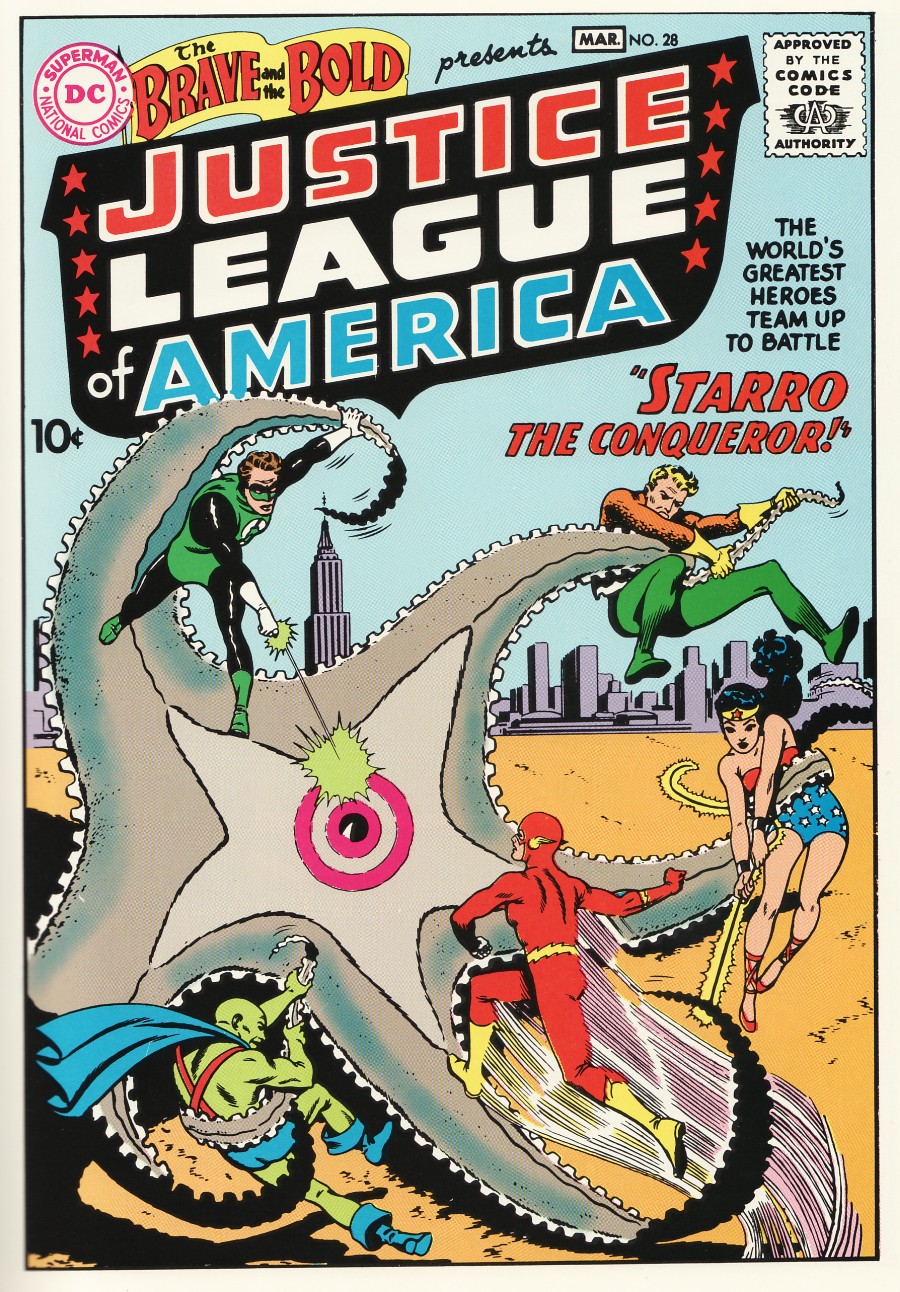
  • JLA, Starro, Snapper Karr (The Brave and the Bold #28),
  • Star Hawkins (Strange Adventures #114),
  • Captain Atom (Space Adventures #33, Charlton Comics).

May: Elongated Man, he becomes the best buddy of Flash (Flash #112).
June:
  • The Trickster (Flash #113),
  • Atomic Knights (Strange Adventures #117), 
  • Professor Ivo, Amazo (The Brave and the Bold #30).
July: The Puppeteer (Green Lantern #1).
August:
  • The Sea Devils (Showcase #27), 
  • The Clock King (World's Finest Comics #111).
September:
  • Kryptonite man (Superboy #83),
  • Cave Carson  (The Brave and the Bold #31).
October:
  • Despero (Justice League of America #1),
  • Thomas Kalmaku, Weaponers of Qward (Green Lantern #2).
November: Arrowette (World's Finest Comics #113).
December: Captain Boomerang (Flash #117).


1961
January: Faceless Hunters (Space Adventures #124).
February:
  • Hawkman & Hawkgirl, Byth (The Brave and the Bold #34),
  • Kanjar Ro (Justice League of America #3).

March: 
  • Sue Dibny, and Ralph marries her off-panel (Flash #119),
  • Hector Hammond (Green Lantern #5),
  • the Star Rovers (Mystery in space #66).
April:
  • Matter Master (The Brave and the Bold #35),
  • Batgirl I (Batman #139).
May:
  • Green Arrow joins the JLA (Justice League of America #4),
  • Tomar-Re (Green Lantern #6), Haunted Tank (G.I. Combat #87).
April: General Zod (Adventure Comics #283).
June:
  • Dr. Destiny (Justice League of America #5), 
  • Shadow Thief (The Brave and the Bold #36).
July: Sinestro (Green Lantern #7).
August: The Top (Flash #122).
September:
  • Atom, Jean Loring (Showcase #34).
  • Flash travels to Earth-2 and meets the Golden Age Flash (Flash #123).
October: Jax-Ur (Adventure Comics #283).
December: Clayface (Detective Comics #298).

1962
January: Qwsp (Aquaman #1).
February:
  • G.I. Robot (Star-Spangled War Stories #101),
  • Mr. Polka-Dot (Detective Comics #300).
March:
  • Metal Men (Showcase #37),
  • Felix Faust, Demons Three (Justice League of America #10).
May: Abra Kadabra (Flash #128).
June:
  • Floronic Man (Atom #1),
  • Dr. Light (Justice League of America #12)..
July:
  • Sonar (Green Lantern #14),
  • Kru-El (Superman's Pal Jimmy Olsen #62).
August:
  • The Elongated Man meets Kid Flash (Flash #130),
  • Antonio Rocca (Superman #155).
September: Atom joins the JLA (Justice League of America #14).
October: Carol becomes Star Sapphire (Green Lantern #16).
November: Chronos (Atom #3).

1963
January: Catman (Detective Comics #311).
March: James Bond, Dr. No, Honey Rider, Three Blind Mice (Showcase #43).
June:
  • Doom Patrol: Robotman, Negative Man, Elasti-Girl, Beast Boy and Chief, General Immortus (My Greatest Adventure #80),
  • Simon Hurt (Batman #156),
  • Dr. Polaris (Green Lantern #21).
August:
  • Crisis on Earths-One: The JLA meets the JSA , debut of Black Canary on Earth-1(Justice League of America #21), 
  • Dexter Myles (Flash #138).
September: 
  • Professor Zoom, the Reverse-Flash (Flash #139), 
  • Tattooed Man (Green Lantern #23).
October:
  • Mera (Aquaman #11), 
  • Shark (Green Lantern #24).
November:
  • Heat Wave (Flash #140),
  • I.Q. (Mystery in Space #87).
December: Eivol Ekdal (Detective Comics #346).

1964
January: The Terrible Trio (Detective Comics #323).
March: Professor T.O. Morrow (Flash #143).
May:
  • The Elongated Man gets his feature (Detective Comics #327),
  • Chac (Hawkman #1).
June:
  • Teen Titans, Wonder Girl (The Brave and the Bold #54), Composite Superman (World's Finest Comics #142).
  • Alfred dies, Dick Grayson's aunt Harriet Cooper debuts and replaces him (Detective Comics #328).
July: President John F. Kennedy (Superman  #170).
August: The Crime Syndicate (Justice League of America #29).
September: The Elongated Man meets Batman and Robin (Detective Comics #331).
October:
  • Zatanna (Hawkman #4, Zatanna's Search, pt. 1: "The Girl Who Split in Two"), probably the first crossover.
  • Sue does the first 'birthday mystery' for Ralph (Detective Comics #332).
November:
  • Mento (Doom Patrol #91),
  • Hawkman joins JLA (Justice League of America #31).
December:
  • Aquaman marries Mera (Aquaman #18).
  • The Outsider (Detective Comics #334),
  • Martin Beene (Detective Comics #334).

1965
January:
  • Metamorpho, Simon Stagg, Java, Sapphire Stagg (The Brave and the Bold #57),
  • Billy Warner, Elongated Man's #1 fan (Detective Comics #335).

February:
  • Enemy Ace (Our Army at War # 151),
  • Zatanna meets Batman (Detective Comics #336, Zatanna's Search, pt. 3: "Batman's Bewitched Nightmare").
March: Getaway Genius (Batman #170).
May: The Riddler of Earth-1 (Batman #171).
June:
  • Immortal Man (Strange Adventures #177), 
  • Evil Star of Earth-1 (Green Lantern #37),
  • Amos Hurd, the Millionaire Cowboy, and wife (Detective Comics #340),
  • Zatanna meets the Atom (Atom #19, Zatanna's Search, pt. 2: "World of the Magic Atom").
July: Goldface (Green Lantern #38).
August: Johnny Thunder of Earth-1 (Justice League of America #37).
September:
  • Animal Man (Strange Adventures #180),
  • the Phantom General (Detective Comics #343).
October:
  • Aquababy (Aquaman #23),
  • Krona (Green Lantern #40),
  • Egg Fu (Wonder Woman #157),
  • Johnny Witts (Detective Comics #344).
  • Lana Lang becomes the Insect Queen (Superboy #124).
November:
  • Judomaster (Special War Series #4, Charlton Comics),
  • Blockbuster (Detective Comics #345).
December: The Key of Earth-1 (Justice League of America #41).

1966
January:
  • Major Disaster (Green Lantern #43),
  • Dial H For Hero (House of Mystery #156),
  • Stanley and his Monster (The Fox and the Crow #95),
  • Zatanna meets Green Lantern (Green Lantern #42, Zatanna's Search, pt. 4: "The Other Side of the World").
April:
  • Enchantress (Strange Adventures #187),
  • The Elongated Man meets Green Lantern, the Elongated Man's red uniform, the Monarch of Menace (Detective Comics #350).
May: Cluemaster (Detective Comics #351).
June: Inferior Five (Showcase #62, they reside on Earth-12), Poison Ivy (Batman #181).
July: Dial H calls Plastic Man (House of Mystery #160, first time in a DC publication).
August:
  • Chief Miles O'Hara (of the 60s Batman show fame) is introduced to Earth-1 (World's Finest Comics #159) 
  • Peter Cannon, Thunderbolt (Peter Cannon... Thunderbolt #1, Charlton Comics),
  • Parasite (Action Comics #340),
  • Bug-Eyed Bandit (Atom #26),
  • Dr. Tzin Tzin (Detective Comics #354).
September:
  • Ocean Master (Aquaman #29),
  • Nightshade (Captain Atom #82, Charlton Comics),
  • The Elongated Man meets Zatanna (Detective Comics #355, Zatanna's Search, pt. 5: "The Tantalizing Troubles of the Tripod Thieves"). 
October:
  • It is revealed that Alfred is alive and that he's actually the Outsider, he resumes his dutties as the butler of the Wayne Manor (Detective Comics #356).
  • Amalak (Superman #190).
November:
  • Blue Beetle II (Captain Atom #83, Charlton Comics),
  • Peacemaker (Fightin' 5 #40, Charlton Comics),
  • Ultra, the Multi-Alien (Mystery in Space #103),
  • Barry marries Iris West (Flash #165).
December: Son of the Plastic Man (Plastic Man, vol. 2 #1, the character resides on Earth-12).

1967
January: Batgirl (Detective Comics #359), B'wana Beast (Showcase #66), Allen Funt (Action Comics #345).
February: , Zatanna's Search ends: The Elongated Man teams up with the JLA (Batman, Hawkman, Atom and Green Lantern) to help Zatanna finally find Zatara (Justice League of America #51, "Z - as in Zatanna - and Zero Hour"), Scarecrow of Earth-1 (Batman #189).
May: The Maniaks (they are a rock band like Josie and the Pussycats, Showcase #68).
July: Lion-Mane (Hawkman #20).
August: Enigma of the Elongated Evildoer! (Detective Comics #367).
September: Black Manta (Aquaman #35).
October: Deadman (Strange Adventures #205), The Elongated Man teams up with the Atom (Detective Comics #368).
November: Woody Allen (Showcase #71), the Awesome Threesome (Aquaman #36).

Notes: I used cover dates for this list (wich means you have to substract a couple of months).
Font types are modified according to the character.
  • Important character,
  • Character with an equivalent on Earth-2,
  • Character with an Earth-2 double,
  • Might have Earth-2 double, but their debut date makes it abiguous,
  • Crossed-over descendant of an Earth-2 character,
  • Created in other media first.
  • Not tied to the DCU yet,
  • Related to the Elongated Man.  
Continue to:

Go back to:
Related articles: